When You Stop Trusting Your Own Eyes: Understanding Pluralistic Ignorance and Abuse ~
If no one else thinks it's abuse...maybe it isn't."
Those words have echoed through the minds of countless survivors.
Not because the abuse wasn't happening.
But because no one around them seemed to recognize it.
Family members stayed silent.
Friends said, "Every relationship has problems."
Coworkers saw only the charming side of the abuser.
Even the person causing the harm insisted,
"You're too sensitive."
"You're imagining things."
"That never happened."
"You're the problem."
Over time, something subtle but incredibly powerful begins to happen.
You stop trusting yourself.
Psychologists have a name for this phenomenon: pluralistic ignorance.
It describes a situation where people privately question what they're experiencing but assume everyone else sees the situation differently. Because no one speaks up, everyone remains silent, reinforcing the false belief that nothing is wrong.
In abusive relationships, this can become one of the most damaging psychological traps a survivor experiences.
The Silence That Creates Doubt
Imagine sitting in a room where everyone appears calm.
Suddenly, you smell smoke.
Your instincts tell you something is wrong.
But no one else reacts.
No one looks concerned.
No one moves toward the exit.
After a few moments, you begin questioning yourself.
"Maybe I imagined it."
"Maybe it's supposed to smell like this."
"If it were really dangerous, someone else would say something."
The smoke hasn't disappeared.
Your confidence in your own perception has.
That is how pluralistic ignorance works.
The absence of other people's reactions becomes evidence against your own experience.
How Abuse Creates This Trap
Abuse often happens behind closed doors.
The person causing harm may appear generous, charming, and respected in public.
Friends see kindness.
Coworkers see confidence.
Neighbors see a loving family.
You see what happens when the doors close.
When you finally gather the courage to tell someone, they may respond with disbelief.
"They're always so nice to me."
"I can't imagine them doing that."
"Are you sure that's what happened?"
Even well-meaning people sometimes minimize what they don't fully understand.
Every dismissive response plants another seed of doubt.
You begin wondering if you're overreacting.
If you're too emotional.
If you're remembering things incorrectly.
Eventually, you stop asking one of the most important questions:
"What do I know to be true?"
Instead, you begin asking,
"What does everyone else believe?"
Gaslighting Makes It Worse
Pluralistic ignorance often works hand in hand with gaslighting.
Gaslighting is a form of psychological manipulation that causes someone to question their memory, perception, or judgment.
An abusive partner may repeatedly say:
"That never happened."
"You're making things up."
"You're remembering it wrong."
"You're always so dramatic."
When those messages are reinforced by silence or misunderstanding from others, self-doubt grows even stronger.
You begin outsourcing your reality.
Instead of trusting your own experiences, you wait for someone else to validate them.
Waiting for Permission to Believe Yourself
One of the greatest tragedies of abuse is that many survivors believe they need permission before trusting what they already know.
They wait for a friend to agree.
A family member to notice.
A counselor to confirm.
The police to validate.
A judge to decide.
Only then do they allow themselves to believe what their heart has been whispering all along.
But your pain does not become real because someone else acknowledges it.
It was real the moment you experienced it.
Validation from others can be comforting.
It should never become the requirement for believing your own reality.
Learning to Trust Yourself Again
Healing often begins with one courageous decision:
Choosing to believe yourself.
Not because your emotions are always perfect.
But because your experiences matter.
Your instincts matter.
Your memories matter.
Your feelings deserve thoughtful attention instead of immediate dismissal.
Learning to trust yourself again doesn't happen overnight.
It grows one small step at a time.
Keeping a journal.
Talking with a trauma-informed counselor.
Speaking with trusted friends who listen without judgment.
Learning about the patterns of emotional, psychological, financial, and physical abuse.
Each step helps rebuild something abuse tried to take away:
Confidence in your own perception.
Your Inner Voice Is Not Your Enemy
Many survivors become afraid of their own thoughts.
They've been told for so long that they're wrong, irrational, or "too much" that they stop listening to themselves altogether.
Yet your inner voice is often the first part of you to recognize danger.
It notices patterns.
It remembers promises that were broken.
It feels the tension before your mind can explain it.
That inner voice deserves compassion—not dismissal.
The goal isn't to react to every emotion without reflection.
The goal is to stop assuming your perceptions are automatically untrustworthy.
Healthy people ask questions.
Abuse teaches people to silence them.
Healing gives you permission to ask them again.
Breaking the Silence
One reason organizations like Mandie Safe Haven exist is because silence allows abuse to remain hidden.
When survivors begin sharing their experiences, something remarkable happens.
Someone else quietly says,
"I thought I was the only one."
Another says,
"I thought I was imagining it."
Another finally realizes,
"I'm not crazy."
The silence that once created confusion becomes replaced with understanding.
What felt isolating becomes shared.
What felt shameful becomes survivable.
That is the power of community.
Not to tell you what your reality is.
But to remind you that you don't have to carry it alone.
Trust What You Know
If you've been questioning your own experiences…
If you've spent months or years waiting for someone else to confirm what your heart already sensed…
If you've wondered whether you're "making too much of it" simply because others couldn't see what happened behind closed doors…
Pause for a moment.
Take a deep breath.
Ask yourself one simple question:
"If no one else's opinion existed, what would I know to be true?"
The answer may not solve every problem overnight.
But it may be the first step toward reclaiming something abuse tried to steal:
Your trust in yourself.
At Mandie Safe Haven, we believe one of the most powerful parts of healing is rediscovering your own voice. You don't have to wait for unanimous agreement before acknowledging your pain. You don't have to earn the right to believe your own experiences.
Sometimes the bravest thing you can do is trust the quiet truth you've known all along.
Because healing often begins the moment you stop asking everyone else what your reality is...
…and start believing what your own heart has been trying to tell you.
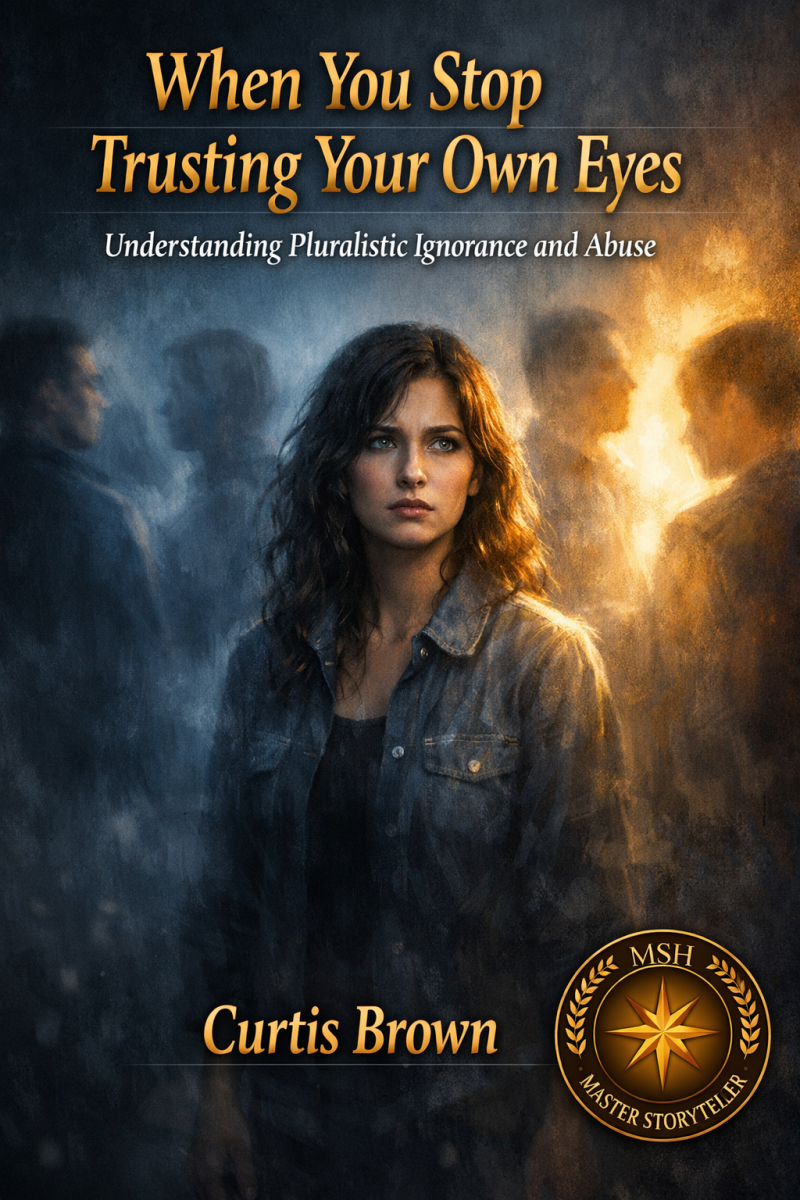
Pluralistic ignorance
is a social phenomenon where individuals mistakenly believe that their private beliefs or opinions differ from the perceived beliefs of the majority, leading them to conform to what they think is the group norm.
Definition and Explanation
Pluralistic ignorance occurs when members of a group privately reject a norm or belief but assume that others accept it. This misperception can lead to a false consensus, where individuals conform to what they believe is the majority opinion, even if it is not the case. For example, in a classroom setting, a student may feel confused during a lecture but remains silent, thinking that everyone else understands the material. This collective silence reinforces the belief that the majority comprehends the lecture, even if many share the same confusion Simply Psychology+1.
Origins and Research
The term "pluralistic ignorance" was first introduced by psychologist Floyd H. Allport and his students in the early 20th century. They observed that individuals often do not act on their personal convictions unless they believe those convictions are shared by others. This phenomenon has been studied extensively in various contexts, including social norms, group behavior, and emergency situations Simply Psychology+1.
Implications
Pluralistic ignorance can have significant consequences, such as:
- Social Conformity: Individuals may suppress their true opinions to fit in with what they believe is the majority view, leading to a lack of authentic expression within groups.
- Inaction in Emergencies: In situations where action is needed, such as witnessing an emergency, individuals may hesitate to intervene, thinking that others are not concerned, which can lead to the bystander effect Simply Psychology.
- Reinforcement of Negative Norms: It can perpetuate harmful behaviors or beliefs within a group, as individuals may feel pressured to conform to what they perceive as the dominant attitude, even if they disagree Wikipedia.
Examples
A classic example of pluralistic ignorance is found in Hans Christian Andersen’s fairy tale "The Emperor’s New Clothes," where everyone pretends to see the emperor's nonexistent clothes because they believe others do. This illustrates how fear of social judgment can lead to collective silence and conformity Wikipedia.
In summary, pluralistic ignorance highlights the disconnect between private beliefs and public behavior, emphasizing the importance of open communication and awareness of shared sentiments within groups to combat this phenomenon.
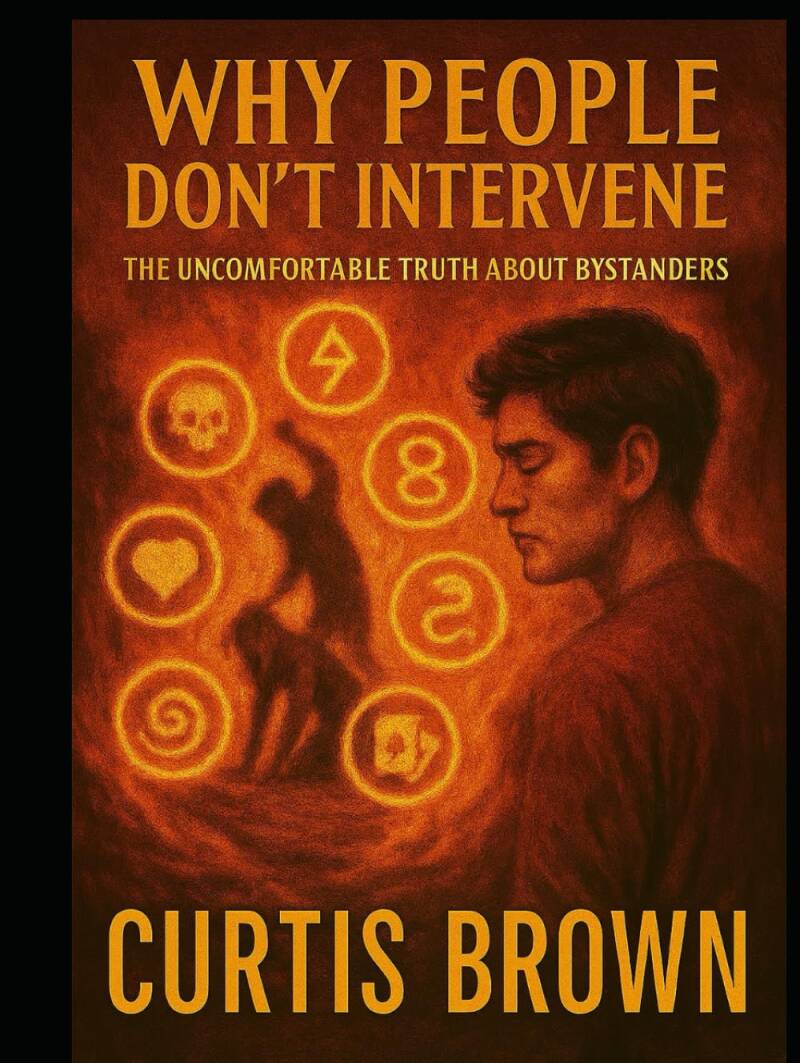
This is a powerful and controversial book, which should have a warning label.
I have received feedback from colleagues of mine about how powerful, intimidating, long overdue...and one person stated it might be an omen.
Regardless this story had to be told. I will admit it was one of the most difficult pieces I have written about, knowing the truth can be frightening. I caution you to read at your own comfortable pace and take as many breaks as needed.
The Question That Haunts Us
"I knew something was wrong. Everyone knew. Why didn't anyone do anything?"
This is the question that echoes through survivor testimonies, court transcripts, investigative reports, and private confessions. It's the question asked by children who were abused while teachers, coaches, and neighbors watched. By domestic violence victims whose friends and family knew but stayed silent. By workplace harassment survivors whose colleagues witnessed but said nothing. By elderly people neglected in care facilities with staff all around them.
Why didn't anyone help?
It's also the question that haunts witnesses years after the fact. The coworker who saw harassment but didn't report it. The neighbor who heard domestic violence through the walls but never called police. The family member who suspected child abuse but convinced themselves they were imagining things. The colleague who knew about financial exploitation but didn't want to get involved.
Why didn't I do something?
This book exists in the space between these two questions—between victims asking "why didn't you help?" and witnesses asking "why didn't I help?" Between the abandonment survivors experience and the paralysis witnesses feel.
This book is for the witnesses. For anyone who has ever known or suspected that someone was being harmed and struggled with what to do about it. For anyone who's ever stayed silent and wondered why. For anyone who wants to intervene but doesn't know how. For anyone working in systems that respond to abuse and wrestling with how to do better.
This book is also for survivors who want to understand why the people around them didn't help—not to excuse that failure, but to make sense of something that often feels incomprehensible.
Add comment
Comments