What You Keep Looking At Is What Keeps Finding You ~
Nobody warns you that the mind doesn't stop scanning for danger just because the danger is over.
You survived something. You got out, or it ended, or you found your way to safer ground — and your mind kept doing the exact thing that kept you alive while it was happening: watching for the threat. Reading faces for warning signs. Replaying what went wrong so you'd catch it faster next time. That wasn't a flaw. That's what kept you breathing. But a mind trained to hunt for danger doesn't know how to stop hunting just because the hunt is over. It keeps looking. And what it keeps looking at is what it keeps finding.
That's not mysticism. That's how attention works.
Your focus is not a mirror. It's a filter.
Here's the part that gets misunderstood constantly: focusing on something doesn't make it appear out of nowhere. The threats, the disappointments, the reasons it might happen again — those are already there, mixed in with everything else that's also true. Focus doesn't create reality. It decides which slice of an already-complicated reality you actually notice, remember, and build your next decision around.
If your attention has been trained — by necessity, by survival — to scan for what could go wrong, then what could go wrong is what you'll see first, fastest, and most often. Not because it's the only thing there. Because it's the thing you were trained to find.
Why "just think positive" was never the answer
This isn't a pitch for positive thinking. Telling a nervous system that's scanning for danger to "just focus on the good" doesn't work, because it's not fighting a bad attitude — it's fighting a survival mechanism that's still convinced it's on duty. What actually shifts it is smaller and slower: deliberately, repeatedly, redirecting where your attention lands, until the redirect stops taking effort and starts being where your mind goes on its own. That's a retraining process, not a mood.
What this looks like in practice
It starts absurdly small — not "focus on gratitude" in the abstract, that's too vague for a mind on alert to use. It's specific: naming one thing, right now, in this room, that isn't a threat. The chair holding your weight without complaint. A person who has shown up consistently, even once. A decision you made today that turned out fine. Do that daily, on purpose, even when it feels pointless. You're not erasing the vigilance — you're building a second channel next to it.
The outcome you're actually working toward
This isn't about becoming someone who doesn't notice danger anymore. That instinct may have saved your life once. The goal is choice — being able to notice a real threat and act on it, while also being able to notice safety and progress and actually register that they happened too. Right now, if your attention only knows one channel, you don't have a choice. You have a reflex.
What to do with this
Pick one moment today and, before it ends, name one specific thing in it that was safe, good, or working. Not big. Small and true: this conversation didn't go badly. Nobody in this room is a threat. Say it in your head, or write it down if that helps it stick. Do it again tomorrow, and the day after — not as a mood you're forcing, but a muscle you're building back, rep by rep.
What you keep looking at is what keeps finding you. You didn't choose to become an expert at finding the danger. But you can choose, slowly and on purpose, to also become someone who notices when you're safe.
Even though I personally don't suffer from abuse, I am able to recognize it's patterns and how it affects the people around me.
This is not only true for those who have suffered, but those who are stuck in a rut, and looking for a way out. It is our ATTENTION that we give things in our lives that controls our DIRECTION.
If we have doubts about our destiny or goals, they will show up as excuses as to why we don't succeed. However, if we ask ourselves a better or different question on how to accomplish our goal or objective, we will search for unorthodox solutions that will guide us to where we want to go.
Not that the solution is unorthodox, just that it may be something we haven't thought about as a viable solution.
Prayers,
Curtis
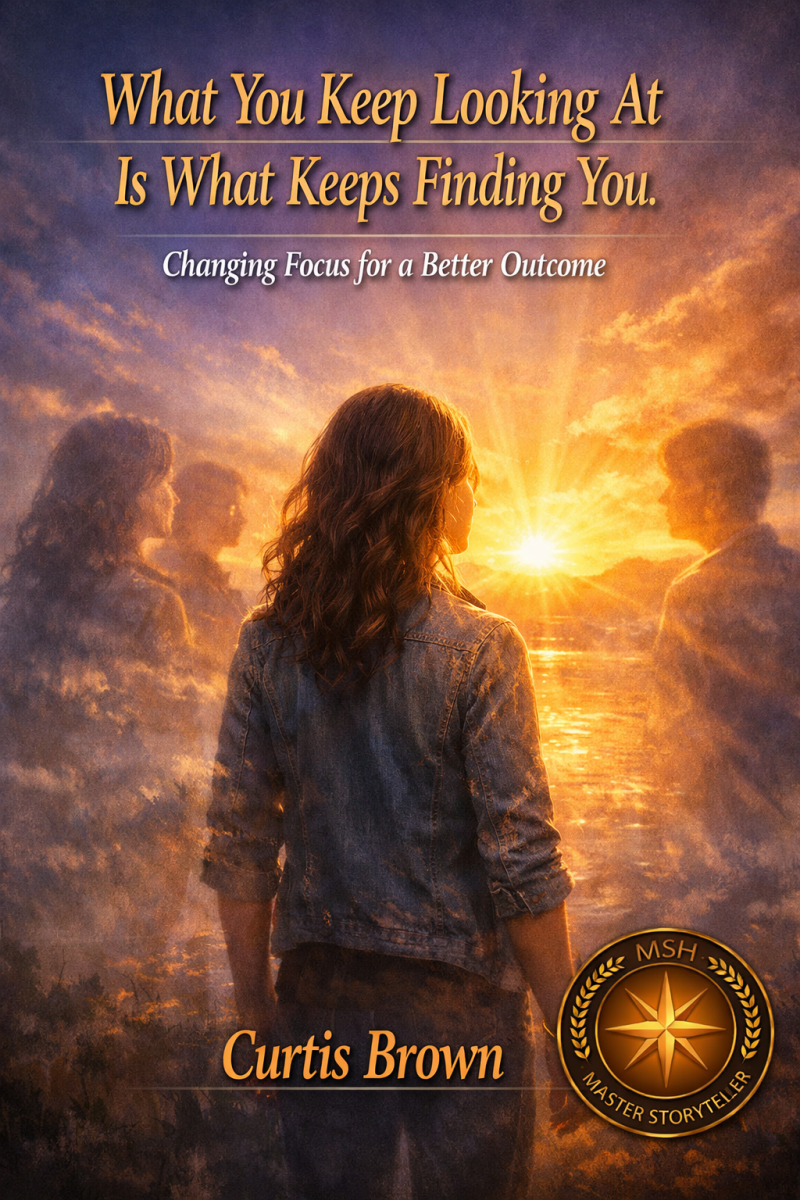
Changing Focus for a Better Outcome
There’s a quiet truth that shapes every moment of our lives: what we focus on expands. Our attention is not passive — it’s creative. It builds the world we see, the emotions we feel, and the outcomes we attract.
When we keep looking at pain, fear, or rejection, those patterns begin to echo back. When we turn our gaze toward healing, possibility, and love, those begin to find us instead.
🌅 The Mirror of Attention
Every thought is a lens. Every emotion is a reflection. The mind doesn’t just observe reality — it filters it.
If we constantly scan for what’s wrong, we’ll find it everywhere. But when we start noticing what’s right — the small kindnesses, the moments of peace, the glimpses of beauty — our nervous system begins to recalibrate. The world doesn’t change overnight, but our perception does. And perception is the seed of transformation.
💫 Why Focus Matters
Psychologists call this selective attention: the brain’s tendency to highlight what we expect to see. It’s why survivors of trauma often feel trapped in cycles of fear — the mind keeps scanning for danger because it learned that vigilance equals safety. But healing begins when we teach the mind that safety can also come from calm, connection, and trust.
Changing focus isn’t denial. It’s direction. It’s choosing to look toward what builds rather than what breaks.
🌈 How to Shift Your Focus
-
Notice the pattern: Awareness is the first step. Recognize what you keep looking at — the stories, the fears, the expectations.
-
Interrupt the loop: When you catch yourself spiraling, pause. Breathe. Ask, Is this what I want to keep finding?
-
Redirect with intention: Choose one thing that feels hopeful or true, even if it’s small. Focus there until it grows.
-
Reinforce with gratitude: Gratitude trains the brain to notice abundance instead of absence.
-
Visualize the outcome: See yourself living in the reality you want to create — not as fantasy, but as rehearsal for truth.
🔥 The Power of Choice
Every day, we decide what to look at. And what we look at decides what finds us.
If we keep staring at the wound, we’ll keep feeling the pain. If we start looking at the healing, we’ll begin to feel the strength.
This isn’t magic — it’s alignment. It’s the moment when focus becomes faith, and faith becomes form.
✨ Closing Reflection
The world will always offer shadows. But the light is waiting for your gaze. When you choose to look toward hope, peace, and possibility, those things begin to recognize you — and they start finding their way back.
So look carefully. Because what you keep looking at is what keeps finding you.
Add comment
Comments