Here is a listing of books I feel will help with
trauma and Transformation.
(For a complete listing click on this link)
Go to my author's page for a complete listing of all my titles
Some of my books are personal for family members, that I did not list below.
Coming Soon!
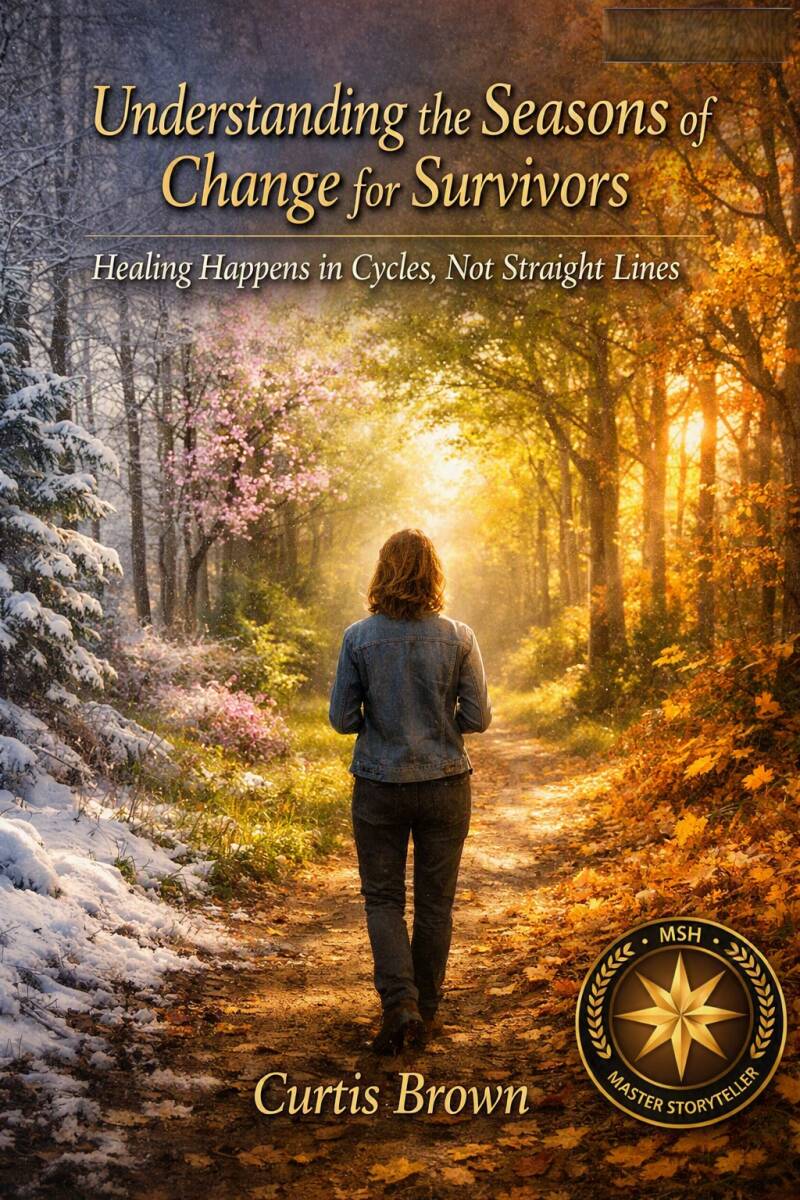
The changing of seasons is not just for survivors — it is part of nature as well as people. A tree doesn't apologize for losing its leaves in autumn, and it doesn't rush spring before the ground is ready. It simply moves through what the season requires, trusting that dormancy is not death and that growth will come again when the conditions are right. We rarely extend ourselves that same trust. We treat our own winters — the stretches where nothing feels like it's growing, where we feel stripped down to something bare — as failures instead of what they actually are: a necessary part of the same cycle that eventually produces everything we're proud of.
Understanding how we develop as we age, and how we strive in our endeavors, follows this same cyclical pattern, whether we notice it or not. There are seasons of planting, where we take in new information, new relationships, new ways of seeing ourselves, often without any visible result yet. There are seasons of growth, where effort finally starts to show, and it feels like momentum is on our side. There are seasons of harvest, where we get to actually use what we built — and there are seasons of dormancy, where the most productive thing we can do is rest, take stock, and let what's underneath the surface do its quiet work before the next push begins. None of these seasons is more important than the others, and none of them is optional. Skip one, and the next one arrives unprepared.

The Quiet That Heals
Survivors often live in a world of noise — intrusive thoughts, hyper‑vigilance, and emotional echoes of the past. Prayer and meditation create a sacred pause, a moment where the nervous system can breathe again.
In that stillness, the body begins to remember safety.
The Science of Stillness
Research shows that both prayer and meditation:
-
lower cortisol (stress hormone)
-
regulate heart rate and breathing
-
improve emotional resilience
-
strengthen neural pathways linked to calm and empathy
For survivors, these physiological shifts are profound. They turn survival into restoration.
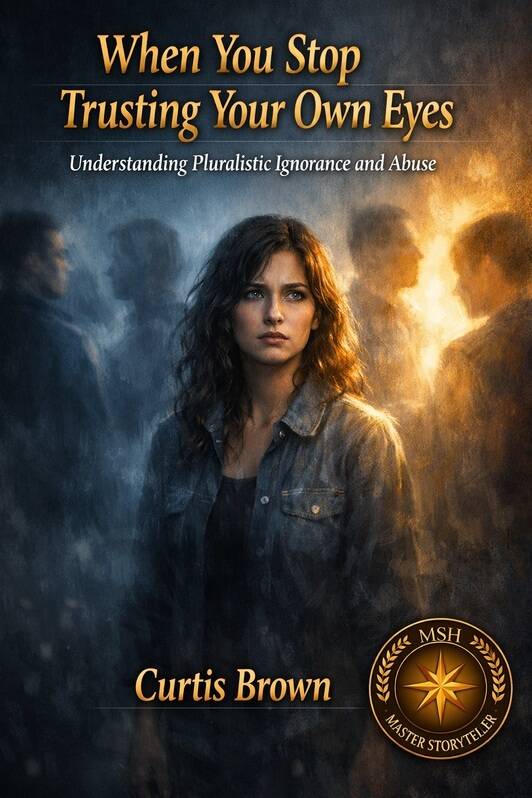
When You Stop Trusting Your Own Eyes names the exact mechanism behind that loss — a well-documented psychological pattern called pluralistic ignorance, in which a room full of people privately believe something is wrong and stay silent anyway, each one convinced everyone else must know better. It isn't denial. It isn't weakness. It's a shared failure of nerve, dressed up as caution, and it explains both sides of the silence survivors live inside: the doubt that keeps them quiet, and the identical doubt that keeps the people around them — sisters, coworkers, neighbors, old friends from ever saying what they've noticed.
The intertwined stories of Renee, a survivor slowly talked out of trusting her own instincts, and Diane, a neighbor who heard something through a shared fence line, spent years assuming someone closer must already be handling it, this book shows exactly how an entire community of well-meaning, decent people can each hold a piece of the truth and never once put the pieces together and exactly what it takes to finally close that gap.
What This Book Will Show You
For a survivor, this book will help you locate the actual first moment your doubt began — not the worst thing that happened, but the small, easy-to-miss instant where you first used someone else's calm as evidence against your own instincts. You'll learn why that moment felt so reasonable at the time, why it got faster and more automatic with repetition, and — critically — how to rebuild a working, reliable relationship with your own perception going forward. Not through affirmations or willpower, but through a concrete, repeatable practice: noticing your instinct, recording it before you can talk yourself out of it, and checking it later against what actually happened. This book treats trust in your own judgment as a skill to be rebuilt with evidence, not a feeling to be willed into existence.

The full Action Architecture framework:
- Why Motivation Fails — grounded in dopamine and ego depletion research; names this as a design failing, not a character failing
- Element 1 — Trigger — built around Gollwitzer's implementation intention research; the if-then structure that pre-decides the decision before resistance can insert itself
- Element 2 — Structure — the defined form of the action: starting point, endpoint, duration; with the principle that lowering the cost of beginning increases the frequency of beginning
- Element 3 — Environment — physical and digital design; names the platforms competing for attention as an actively opposing architecture that must be consciously countered
- Element 4 — Accountability — the social registration of a private intention; specific, real, and supportive rather than punitive
Two supporting techniques:
- Habit Stacking — attaching new behaviors to existing anchors using the "after" construction
- The First Five Minutes Rule — the specific response to initiation resistance; commit only to beginning, and let momentum carry the rest

Narcissistic abuse doesn't start with cruelty. It starts with charm — the kind that feels like safety, attention, and love. But over time, that charm becomes control, and the survivor begins to lose sight of who they are.
Understanding these patterns is the first step toward freedom, and it matters more than most survivors realize going in, because narcissistic abuse rarely announces itself the way physical violence does. There's no single moment you can point to and say "that's when it started." Instead, it arrives as a slow erosion — a compliment that comes with a condition attached, a mood that controls the temperature of an entire room, a version of reality that shifts depending on what serves the narcissist in the moment. Without a name for what's happening, a survivor is left trying to make sense of chaos using logic that simply doesn't apply, and that mismatch is exhausting in a way that's hard to explain to anyone who hasn't lived it. You end up doubting your memory, your reactions, your right to be upset about things that would upset anyone. Not because you're irrational, but because you're being systematically taught that your perception of events can't be trusted.
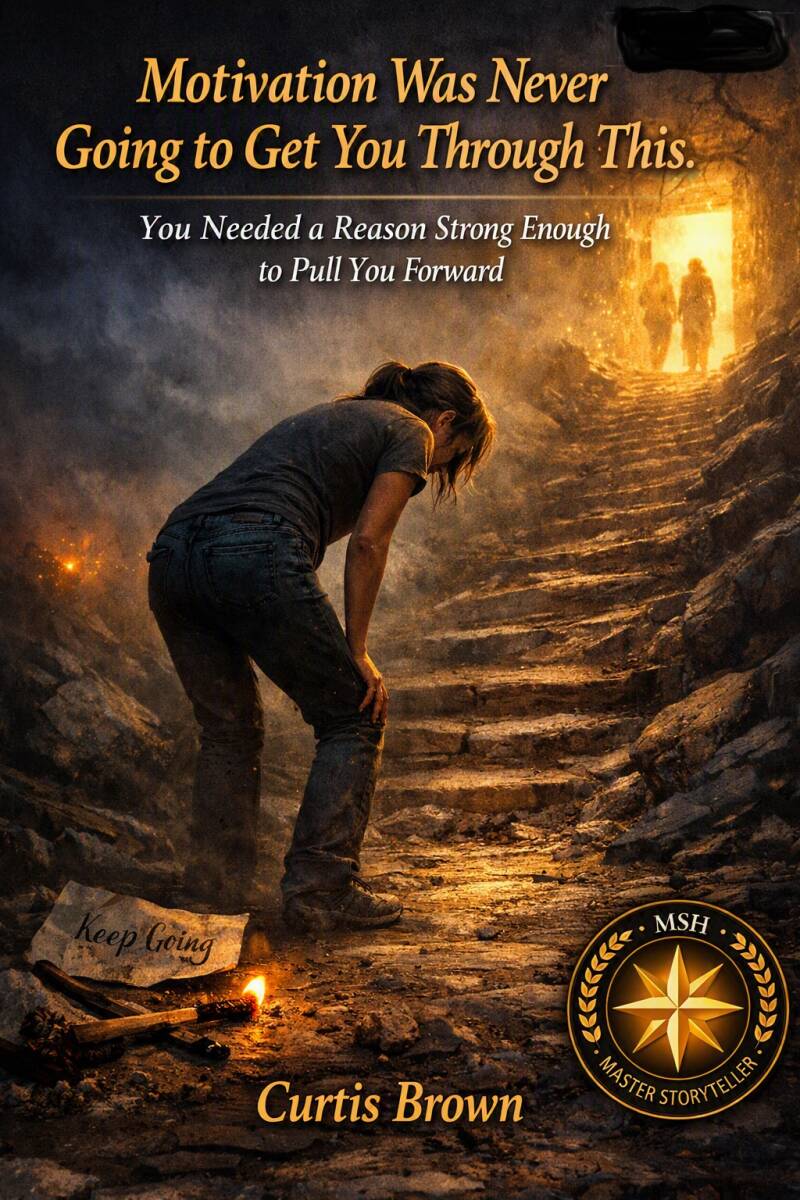
Motivation is loud. It’s flashy. It’s the pep‑talk, the playlist, the “you got this” meme that feels good for about twelve minutes.
But trauma doesn’t respond to motivation. Trauma responds to truth.
And the truth is simple: Motivation was never going to get you through this.
Not because you’re weak. Not because you didn’t try hard enough. But because motivation was designed for short bursts, not long battles. It’s a spark — not a strategy.
Healing requires something deeper. Something quieter. Something that doesn’t burn out when life gets heavy.
Healing requires a pull‑strategy — a WHY strong enough to draw you forward even when you’re exhausted.
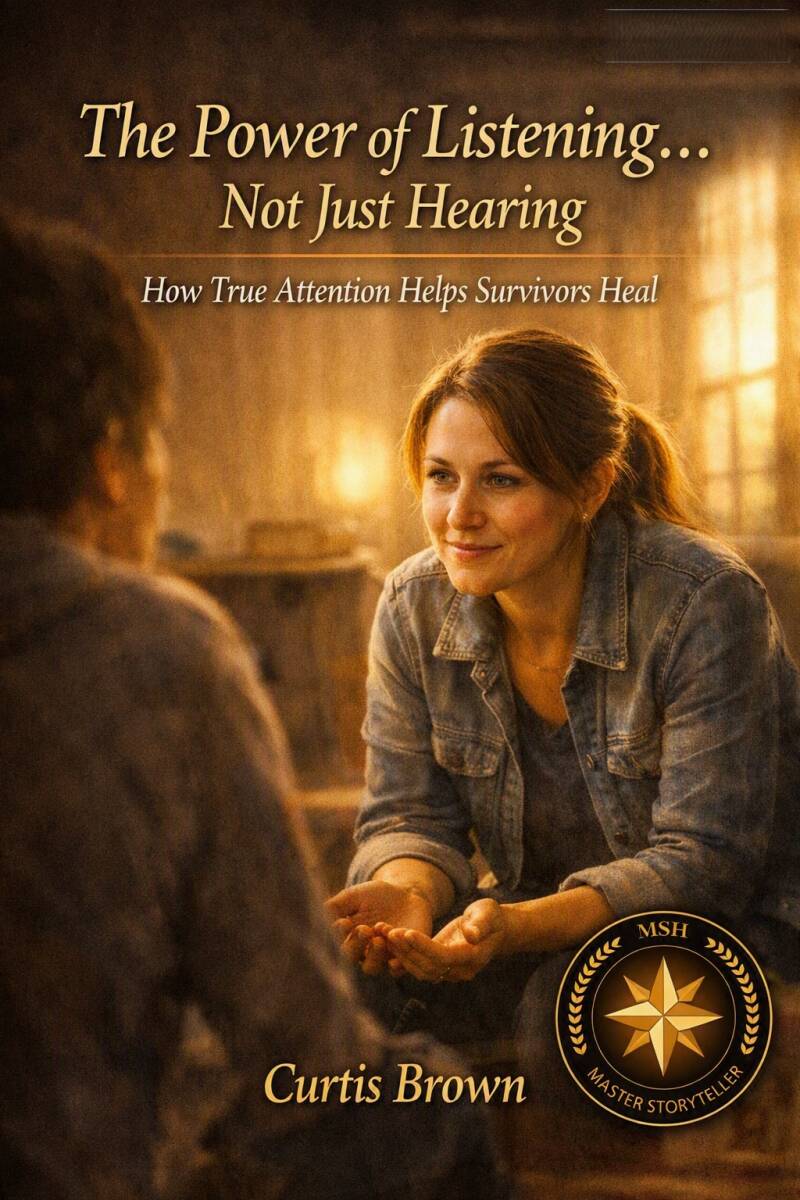
Listening Is an Act of Courage
Most people hear words. Few listen deeply enough to understand the world behind them.
Listening requires:
-
slowing down
-
setting aside your own reactions
-
letting silence exist
-
allowing someone else’s truth to take up space
For survivors, this is transformative. It’s often the first moment they feel believed without being questioned, rushed, or minimized.
Why Survivors Need Presence, Not Solutions
Survivors don’t need someone to fix their pain. They need someone willing to sit with it.
When you listen without trying to solve, you communicate:
-
Your story matters.
-
Your feelings are valid.
-
You don’t have to carry this alone.
This is how trust begins to rebuild — slowly, quietly, and with great care.

Who are you...when no one else is telling you who to be?
Have you ever felt like you're living a life that doesn't quite fit?
Maybe you've achieved success but still feel unfulfilled. Perhaps you've spent years meeting everyone else's expectations while quietly wondering what you truly want. Or maybe you're tired of being defined by your past, your mistakes, your fears, or the labels that others have placed on you.
If you've ever asked yourself, "Who am I?" or "What is my purpose?", The Identity Compass was written for you.
This isn't another book filled with empty motivational quotes or unrealistic promises. It's a practical, thought-provoking guide that helps you uncover the beliefs, values, and experiences that have shaped your identity—and empowers you to intentionally become the person you were meant to be.
Inside these pages, you'll discover how to:
• Break free from limiting beliefs and outdated labels that no longer serve you.
• Understand how childhood experiences, relationships, success, failure, and social expectations quietly shape your identity.
• Identify the internal stories that influence your confidence, habits, decisions, and relationships.
• Discover your core values and use them as a compass for making life-changing decisions.
• Recognize strengths and gifts you may have overlooked—including those developed through adversity.
• Transform pain into wisdom, resilience, and purpose without allowing your past to define your future.
Published Works


New Collection
Don't miss out on the chance to learn. Keep an
eye on this space for the latest updates!