The Words Weren't True. They Just Got There First ~
Somewhere in your head there's a sentence you didn't choose.
Maybe it's "you're too sensitive." Maybe it's "no one else would put up with you." Maybe it's your own name, said in a tone that turned it into an insult. You didn't pick that sentence. Someone handed it to you, over and over, until it stopped sounding like their voice and started sounding like a fact.
That's the part people underestimate about words used as a weapon. A bruise fades on a schedule. A sentence doesn't. It can sit quiet for months and then surface the second you make a decision for yourself, the second you take up space, the second you say no. It shows up disguised as your own thought. That's what makes it so hard to fight — you're not just arguing with what someone said to you once. You're arguing with your own mind, because that's where the sentence moved in.
Why words land harder than people think
Words said in a moment of control aren't just insults — they're instructions. "You're crazy" isn't only meant to hurt; it's meant to make you distrust your own read on what's happening, so the next time something's wrong you hesitate before you name it. "No one else would want you" isn't just cruelty; it's meant to make leaving feel more dangerous than staying. Every one of those phrases had a job. The job wasn't just pain. The job was control, and pain was the delivery method.
That's why "just don't let it bother you" has never worked. You're not choosing to be bothered. You're carrying something that was built, on purpose, to be hard to put down.
The sentence isn't evidence
Here's the thing nobody said to you clearly enough, soon enough: a sentence someone used to control you is not information about who you are. It's information about what they needed you to believe so they could keep doing what they were doing. "Too sensitive" wasn't a diagnosis. It was a request for you to stop noticing things they didn't want noticed. "No one else would want you" wasn't a fact about the world. It was a leash.
You don't have to disprove it to be free of it. You just have to see it for what it actually was — not a verdict, a tool.
What relief actually sounds like
Relief rarely comes from someone arguing you out of the sentence. It comes from someone saying something small and specific that doesn't ask you to defend yourself: "That wasn't your fault." "That was about them, not you." "You're allowed to say that out loud." Words like that don't erase the old sentence — they just give it some competition.
What to do with this
Find the sentence — the actual one, in the actual words that were used on you. Write it down if you can stand to. Then write next to it what it was really doing — not what it claimed to be true, but what it was built to make you do: stay quiet, stay small, stay put. Naming the job it was doing is often the fastest way to take the job away from it.
You don't owe that sentence your belief just because it got there first. It was never the truth. It was just loud, and it was early, and it had nothing better to do with you than keep you small. You get to decide it doesn't anymore.
Words are very powerful influences on our inner psyche. They can determine the habits, the personalities, our entire inner core of existence.
The power we allow words over us can be devastating, then again if we are influenced by positive words our life can be totally different.
I divided this post in 2 brief sections letting you know you are capable of changing the influence that was impudently bestowed upon you.
I know words can be painful, and I also know words can be encouraging. So, let's reclaim your story and make it better.
Closing Thought
As words are used against you, be careful you don't imitate the words to others.
Prayers,
Curtis
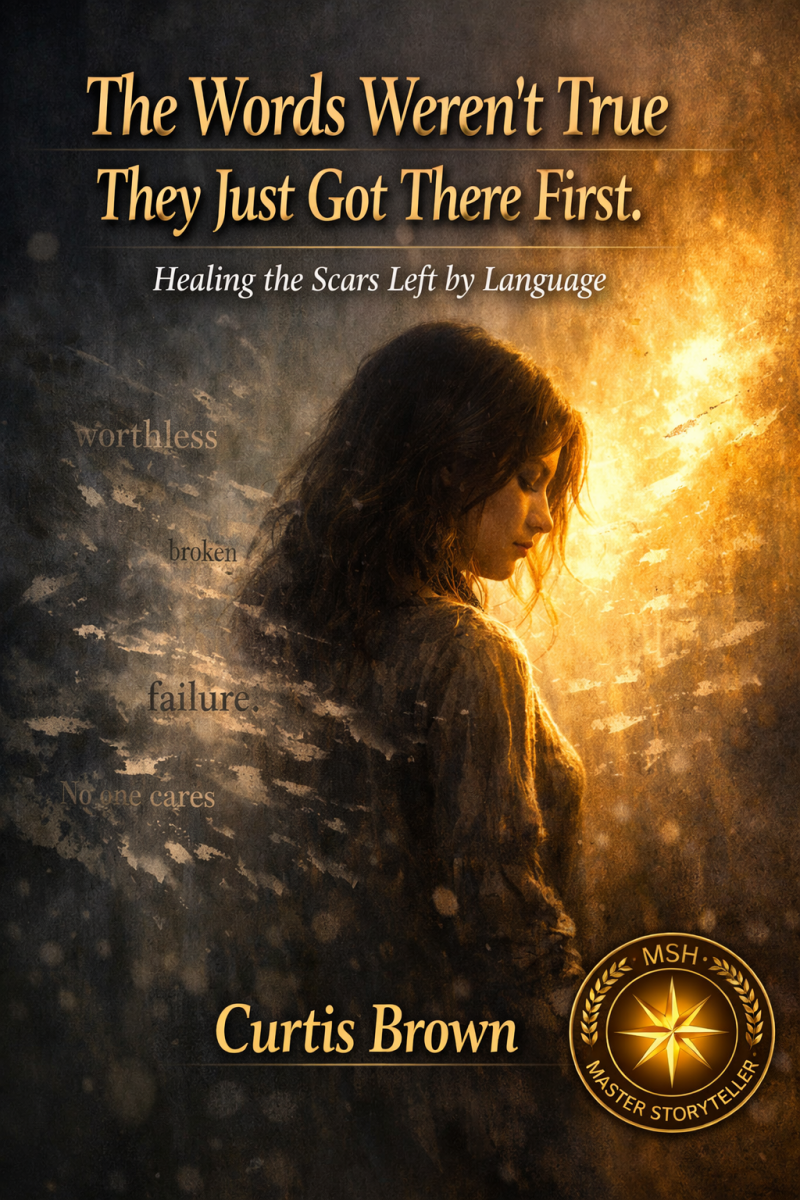
Healing the Scars Left by Language ~
Take the Word Back. Don't Wait for Permission.
Someone took a word and used it on you like a weapon. Maybe it was "broken." Maybe it was "damaged goods." Maybe it was a nickname that started sweet and turned into something that made your stomach drop every time you heard it. Maybe it was your own name, flattened into something small.
Here's what nobody tells you at the time: the word itself was never theirs to own. They just got to it first, and used it worse than anyone should be allowed to. That doesn't mean the word is theirs forever. It means it's sitting there, still yours to pick back up, if you decide you want it.
Why the word still has power
Words that got weaponized against you don't just carry a bad memory — they carry a flinch. Someone says "sensitive" in a totally normal conversation, meaning nothing by it, and your whole body still braces like it's about to be used against you again. That's not you overreacting. That's your nervous system doing its job, remembering the last hundred times that word showed up right before something hurt.
The flinch doesn't mean the word owns you. It means the word is still doing the job it was trained to do, on autopilot, long after the person who trained it is gone. That's worth sitting with — the person may be out of your life completely, and the word is still working overtime for them. That's the part worth taking back.
Reclaiming isn't pretending it didn't hurt
This isn't about standing in front of a mirror telling yourself "damaged" is actually a compliment. That's not reclaiming — that's lying to yourself in a more elaborate way, and it doesn't hold up under pressure. Real reclaiming starts by admitting the word hurt exactly as much as it hurt, every time, no exceptions. The word doesn't lose its power because you decided not to feel it. It loses power because you take it somewhere the person who gave it to you never intended it to go.
Some survivors do this by taking the exact word and redefining it on their own terms — "yes, broken, and still standing, and putting myself back together on my own schedule, not because someone told me to." Other survivors do the opposite — they retire the word entirely and refuse to let it near their own name again. Both are reclaiming. There's no wrong way to do it, and there's no timeline you're supposed to be on.
Finding new words when the old ones can't be saved
Some words are too far gone. They were used too many times, in too many ways, to ever mean anything except what was done to you while you heard them. If that's true for you, don't force it. You're not required to redeem every word that was ever thrown at you. Some of them just need to be set down and left behind, permanently, while you build new language that's entirely yours — words nobody handed you, words that were never used as a leash.
That might sound like calling yourself "still here" instead of "surviving," if surviving got twisted into an insult. It might mean choosing "learning" over "broken," or "guarded" over "damaged." The new words don't have to be softer. They just have to be honestly yours.
What to do with this
Pick one word — the one that still makes you flinch. Write it down. Next to it, write two things: what it was used to do to you, and what you want it to mean now, if anything. If the answer is "nothing — I'm done with it," that's a complete answer. Cross it out and pick the word you're replacing it with instead.
Say the new word out loud once. It'll feel strange. Say it again anyway. Keep practicing. That's how a word stops belonging to the person who broke it and starts belonging to you.
You don't need anyone's permission to do this. You didn't need permission for them to use the word against you either, and they took it anyway. You're allowed to take it back the same way. It's yours. It was always yours. You're just the one who gets to decide what it means now.
Add comment
Comments