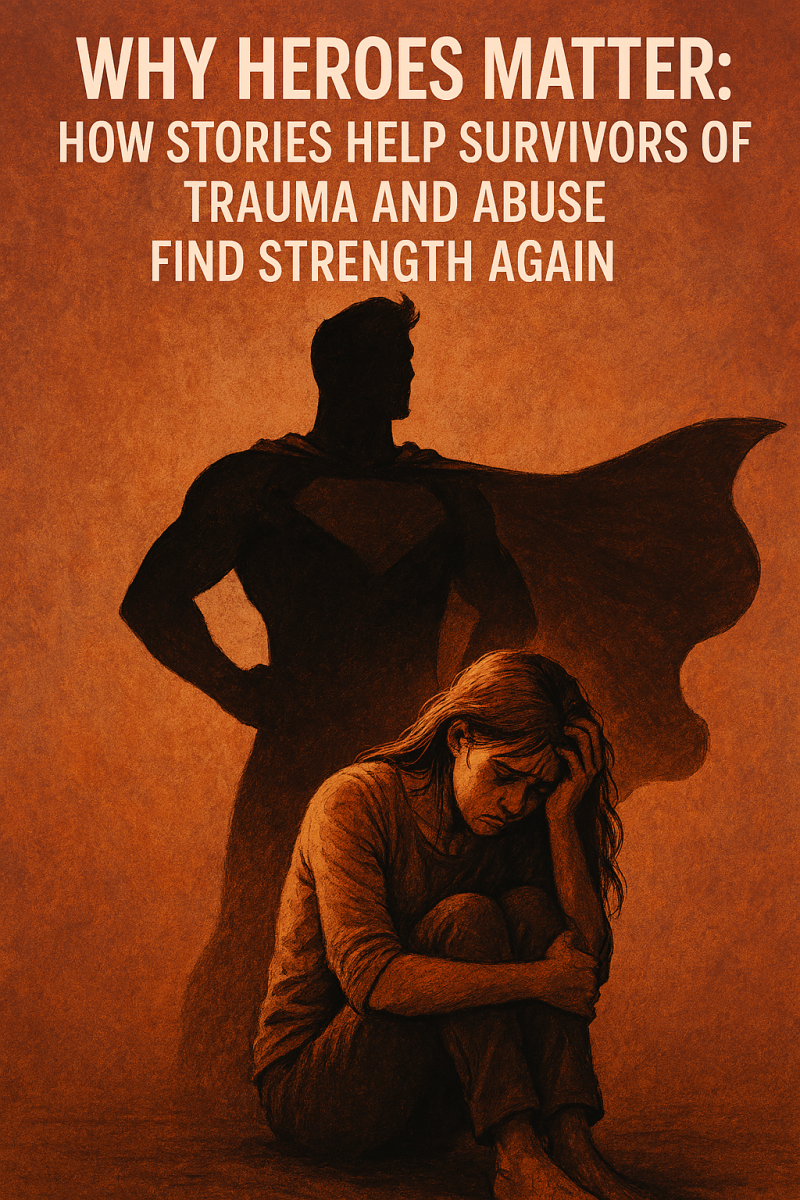
Why Heroes Matter: How Stories Help Survivors of Trauma and Abuse Find Strength Again ~
Throughout human history, stories of heroes have played an important role in how people understand struggle, pain, and perseverance. From ancient myths to modern novels and films, heroic characters have helped societies make sense of hardship and adversity. While these stories often involve dragons, villains, or epic battles, their deeper purpose reaches far beyond entertainment. For many people—especially those who have experienced trauma or abuse—hero stories can provide something deeply meaningful: hope, perspective, and the possibility of healing.
Survivors of trauma often carry invisible burdens. Abuse, neglect, betrayal, or prolonged stress can reshape how a person views themselves and the world around them. Feelings of fear, shame, isolation, or worthlessness can linger long after the events themselves have passed. Recovery can be a complicated and deeply personal journey. In that journey, stories—particularly stories of heroes—can serve as quiet but powerful companions.
Hero stories remind people that hardship is not the end of the story.
The Wounded Hero
One of the most important truths about heroes is that they are rarely perfect. In fact, many of the most compelling heroes are deeply wounded before their journey truly begins. They may have lost something important, endured betrayal, or faced overwhelming circumstances. In many ways, their story begins in darkness.
This mirrors the experience of many survivors.
When someone experiences trauma, it can feel as though life has permanently shifted. The world may no longer feel safe. Trust may feel fragile. Even one's sense of identity can become uncertain. Survivors often feel as though they have been forced into a story they never chose.
Hero narratives challenge that belief.
They remind us that the hero is not defined by what happened to them. The hero is defined by what they choose to do next.
In many stories, the hero does not start strong or confident. They may doubt themselves, struggle with fear, or feel unprepared for what lies ahead. Yet step by step, they continue forward. For survivors, this message can be quietly powerful: strength does not mean you were never hurt. Strength means you continued despite the hurt.
Stories Give Shape to Pain
Another powerful role of hero stories is that they help people express experiences that are otherwise difficult to describe.
Trauma can be deeply confusing. Survivors may struggle to explain what they feel, even to themselves. Emotions may come in waves—anger, sadness, fear, numbness, guilt. Sometimes words fail entirely.
Stories offer metaphors that help make sense of those internal experiences.
In many hero narratives, the character faces monsters, dark forests, or overwhelming enemies. While these elements may appear fictional, they often represent internal battles: fear, grief, shame, or despair.
When survivors connect with these stories, they often recognize parts of their own struggle. The dragon becomes the pain they carry. The dark forest becomes the confusion they are navigating. The long journey becomes the process of healing.
These metaphors allow survivors to speak about their experiences without needing to relive every detail. Someone might say they are “fighting their demons” or “walking through a dark time.” These expressions may sound simple, but they reflect something profound: the mind using story to process pain.
In this way, hero stories provide a language for experiences that might otherwise remain trapped inside silence.
Courage Often Begins Small
One of the most misunderstood aspects of hero stories is the idea of courage. Popular culture sometimes portrays heroes as fearless warriors charging into danger without hesitation. Yet the deeper truth found in many powerful stories is that courage rarely looks dramatic in the beginning.
More often, courage starts quietly.
The hero leaves their home.
The hero asks for help.
The hero refuses to give up after failure.
For survivors of trauma, these small steps can feel enormous. Healing does not happen overnight. Sometimes the most courageous actions are the ones no one else sees: attending a therapy appointment, setting a boundary, speaking honestly about pain, or choosing to keep moving forward when it would be easier to shut down.
Hero stories reinforce the idea that transformation happens gradually. The hero becomes stronger not through a single moment of bravery, but through many small choices made over time.
This perspective can be incredibly validating for survivors. It reminds them that healing is not about becoming fearless. It is about continuing to move forward, even while fear still exists.
Reclaiming the Story
Trauma often disrupts a person’s sense of identity. Survivors may begin to see themselves primarily through the lens of what happened to them. The narrative becomes one of victimization, loss, or damage.
While acknowledging pain is important, staying trapped within that narrative can make recovery even more difficult.
Hero stories offer another possibility.
In many narratives, the hero begins as someone ordinary—sometimes even someone who feels powerless. Through the journey, they face challenges that force them to grow, adapt, and discover strengths they never knew they possessed.
What makes these stories meaningful is not that the hero avoids suffering. It is that suffering becomes part of a larger transformation.
For survivors, this idea can be deeply empowering. It does not erase what happened. Trauma should never be minimized or romanticized. However, it does suggest that the story does not end with the moment of harm.
A survivor’s life can still contain growth, resilience, wisdom, and compassion.
Some survivors eventually become advocates, helpers, or protectors for others who are struggling. Their pain, while never something they would have chosen, becomes part of a deeper understanding of human suffering and healing.
In this way, they step into a role not unlike that of a hero—someone who uses their experience to bring light to others walking through darkness.
Darkness Is Not the Final Chapter
Nearly every powerful hero story includes a moment where everything appears lost.
The hero falls.
The hero doubts themselves.
The enemy seems unstoppable.
Hope feels distant.
These moments are important because they mirror real life. Recovery from trauma is rarely a straight path. Survivors may experience setbacks, moments of doubt, or periods where healing feels impossible.
Hero stories remind us that these moments do not define the ending.
The story continues.
The hero rises again—not because the struggle disappeared, but because something within them refused to give up entirely. Sometimes that “something” is courage. Sometimes it is love. Sometimes it is simply the quiet decision to keep going one more day.
For survivors of trauma and abuse, that message can be incredibly meaningful.
Healing is not about pretending the darkness never existed. It is about recognizing that darkness does not get to write the final chapter.
The Power of Seeing Ourselves in the Story
Ultimately, the reason hero stories resonate so deeply is because they reflect something universal about the human experience. Every person faces challenges, fears, and moments of uncertainty. Stories simply give those experiences a form we can understand.
For survivors of trauma, these stories can offer reassurance that pain does not eliminate the possibility of strength, growth, or meaning.
Sometimes survivors do not need perfect heroes who never struggle. Instead, they need stories that remind them wounded people can still rise. They can still grow. They can still shape the future chapters of their lives.
In many ways, that is the true purpose of the hero’s journey—not to show extraordinary people accomplishing impossible feats, but to remind ordinary people that even after darkness, the story can continue.
And sometimes, the person reading the story is closer to being the hero than they realize.
I have been busy binging on heroes lately and to my inquisitive mind have discovered the power of heroes and how they can guide and inspire us to being the best possible version of ourselves.
It is not always about the damsel in distress, but can be anyone who's passion to help can be considered a hero.
I have decided my next story will be about heroes who have transformed our lives for the better.
Prayers,
Curtis
Add comment
Comments