Finding Your Voice Again: ~
How Journaling Can Help Survivors of Abuse Begin to Heal
If you are reading this, you have already shown enormous courage — the courage to keep going, to seek something better, and perhaps to imagine that healing is possible. We want you to know: it is.
Healing from abuse — whether it came from a partner, a parent, a family member, or someone else you trusted — is not a straight line. It is a winding, tender, deeply personal journey. And while there is no single roadmap that works for everyone, one gentle tool has helped countless survivors begin to find their way back to themselves: journaling.
A Story That May Sound Familiar
Maya grew up in a home where love and fear lived side by side. Her father's temper was unpredictable; her mother's silence felt like a wall she could never climb over. By the time she was a teenager, she had learned to make herself small — to speak less, need less, and feel less.
As an adult, she entered a relationship that felt familiar in ways she couldn't name at first — a partner who slowly chipped away at her confidence, who isolated her from friends, who made her doubt her own memory of events. When she finally left, she didn't feel triumphant. She felt lost.
A therapist suggested she try writing — nothing structured, just whatever came out. The first night, she stared at the blank page for twenty minutes. Then she wrote one sentence: "I don't know who I am anymore." She closed the notebook and cried.
But she came back the next night. And the night after that. Slowly, one page at a time, Maya began to hear her own voice again — raw, uncertain, but unmistakably hers.
— A composite story, drawn from the experiences of many survivors
Why Journaling Works for Survivors
Abuse — in all its forms — has a way of silencing us. It distorts our sense of reality, erodes our self-worth, and teaches us that our feelings are not safe to express. Journaling gently begins to reverse that damage.
When you write, you are doing something quietly revolutionary: you are bearing witness to your own experience. There is no one to minimize what you feel, to tell you it wasn't that bad, or to redirect the story. The page simply receives you — all of you — without judgment.
Research by psychologist Dr. James Pennebaker has shown that expressive writing about traumatic experiences can lead to meaningful improvements in emotional wellbeing, reduced anxiety, and even physical health. Writing helps the brain process difficult memories in a way that gradually loosens their grip on us.
Finding the Style That Feels Right for You
There is no single "right" way to journal. The most important thing is that it feels safe and accessible to you. Here are several approaches — try one, try a few, or create your own:
Free Writing
Set a timer for 10–15 minutes and write without stopping, without editing, and without judgment. Let whatever is inside you come out onto the page — fragmented, messy, or raw. This style is powerful precisely because it bypasses the inner critic that abuse often installs in us.
Prompted Journaling
If a blank page feels overwhelming, a gentle prompt can open the door. Some prompts to begin with:
-
"What would I say to my younger self on the hardest day?"
-
"What does safety feel like to me?"
-
"What have I survived that I haven't given myself credit for?"
-
"What boundaries do I wish I had known I deserved?"
Letters Never Sent
Write a letter you will never mail — to your abuser, to your younger self, or to the version of you who is still healing. This style creates a powerful sense of agency: you get to say everything that was silenced, on your own terms, with no consequences.
Gratitude & Strength Journaling
Abuse can make it hard to see our own strength. A daily or weekly practice of writing three things you navigated, survived, or felt proud of — no matter how small — begins to rebuild a truthful, compassionate picture of who you are.
Future Self Journaling
Write as the person you are becoming — the healed, grounded, safe version of yourself. Describe her day, her feelings, her relationships. This is not denial of where you are now; it is an act of hope that quietly reminds your nervous system that a different future is possible.
Art Journaling
Words are not the only language of healing. If writing feels too heavy some days, try drawing, collaging, painting, or sketching inside your journal. Sometimes an image can hold what language cannot.
A Gentle Note Before You Begin
Journaling is a beautiful complement to healing, but it is not a replacement for professional support. If you have access to a trauma-informed therapist, a counselor, or a survivor support group, we encourage you to use those resources alongside your writing practice.
Also know this: some days, the journal will stay closed. That is okay. Healing is not a performance. There is no grade, no deadline, no right amount of pages. You are allowed to go slowly. You are allowed to take breaks. You are allowed to simply be.
And if you open the journal and only manage one sentence — like Maya did — that is enough. That is more than enough. It is a beginning.
You are not what was done to you.
Your story belongs to you. And you deserve to tell it — in your own words, at your own pace, on your own terms.
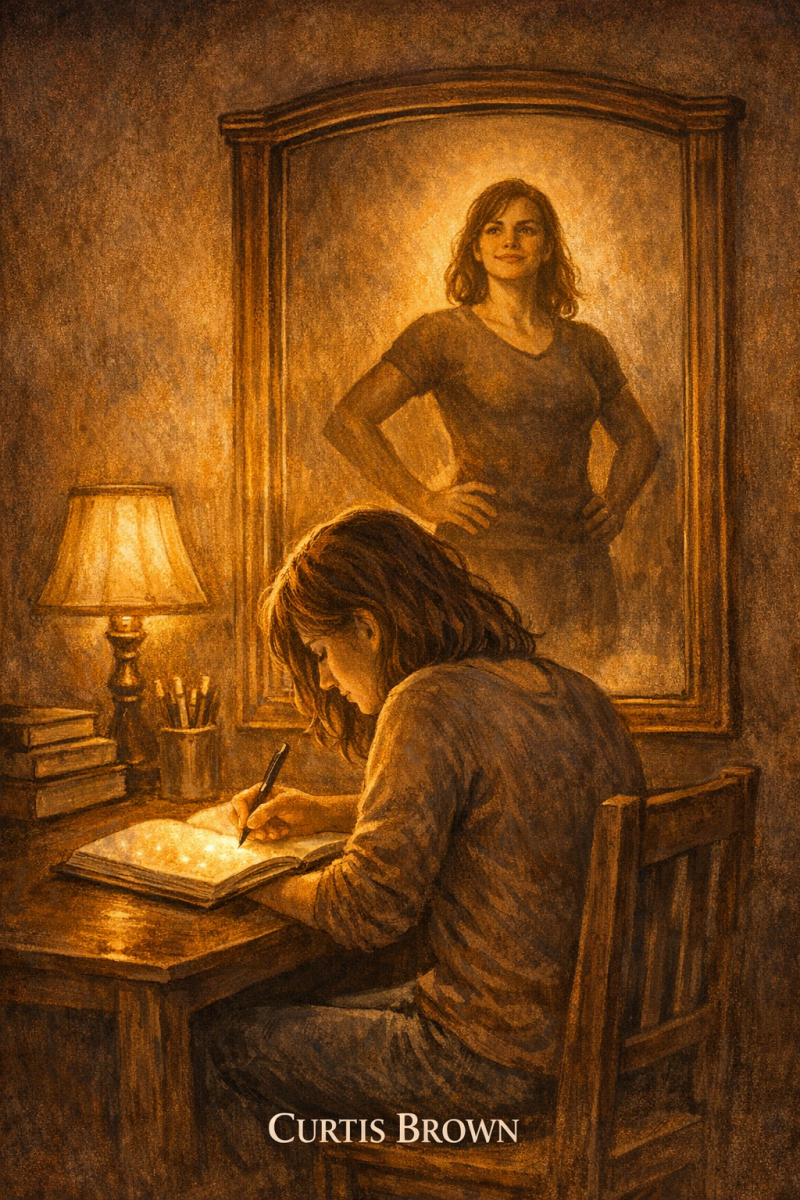
I like to journal, well guess that makes sense, since I am a writer.author etc. I enjoy helping people turn their lives around about what they can be. We have all suffered from trauma at one point in time or another, it is how we view the trauma that challenges us to rise to the occasion and make the best of life, with the gifts we do have.
Trust me, I know throws challenges at us day in and day out, we must keep in mind about where we have been and where we want to go.
Prayers,
Curtis
Add comment
Comments