Recognizing Narcissistic Abuse Patterns ~
How to See the Invisible Damage Before It Consumes You
Narcissistic abuse doesn’t start with cruelty. It starts with charm — the kind that feels like safety, attention, and love. But over time, that charm becomes control, and the survivor begins to lose sight of who they are.
Understanding these patterns is the first step toward freedom.
1. The Idealization Phase — “You’re Everything I’ve Ever Wanted”
At first, the narcissist mirrors your best qualities. They shower you with affection, praise, and promises. It feels like destiny — but it’s actually data collection. They’re learning what you value so they can later weaponize it.
This stage builds emotional dependency. It’s not love; it’s conditioning.
2. The Devaluation Phase — “You’re Never Enough”
Once the narcissist feels secure in your attachment, the tone shifts. Criticism replaces compliments. Affection becomes conditional. You start walking on eggshells, trying to earn back the warmth that once felt effortless.
This is the emotional bait‑and‑switch — the moment you begin doubting your worth.
3. Gaslighting — “That Never Happened”
Gaslighting is psychological warfare disguised as conversation. They deny facts, twist memories, and make you question your perception. You start apologizing for things you didn’t do and defending truths you know are real.
Gaslighting erodes trust in yourself — the very foundation of healing.
4. Triangulation — “Everyone Thinks You’re the Problem”
To maintain control, narcissists often bring in third parties — friends, family, coworkers — to validate their narrative. You’re isolated, discredited, and made to feel paranoid. It’s a tactic designed to keep you off‑balance and dependent.
5. Projection — “You’re So Selfish”
They accuse you of the very behaviors they’re guilty of. If they lie, they call you dishonest. If they manipulate, they call you controlling. Projection keeps you defending yourself instead of seeing the truth.
6. Intermittent Reinforcement — “Maybe They’ll Change”
Just when you’re ready to leave, they offer kindness again — a text, a gift, an apology. It reignites hope and resets the cycle. This pattern creates emotional addiction, similar to gambling: unpredictable rewards keep you hooked.
7. The Discard — “You Were Never That Important”
When you stop serving their ego, they withdraw completely. Coldness replaces connection. They may move on quickly, leaving you confused and shattered.
But this stage is also the beginning of your recovery — the moment you can start rebuilding without their distortion.
Breaking the Cycle
Recognizing these patterns doesn’t mean you failed; it means you’re waking up. Healing begins when you stop trying to decode their behavior and start understanding your own worth.
You are not too sensitive. You are not broken. You were manipulated by someone who needed control more than connection.
Closing Reflection
Narcissistic abuse thrives in silence and self‑doubt. Awareness is the antidote. When you name the pattern, you reclaim your power. And when you reclaim your power, you begin to heal.
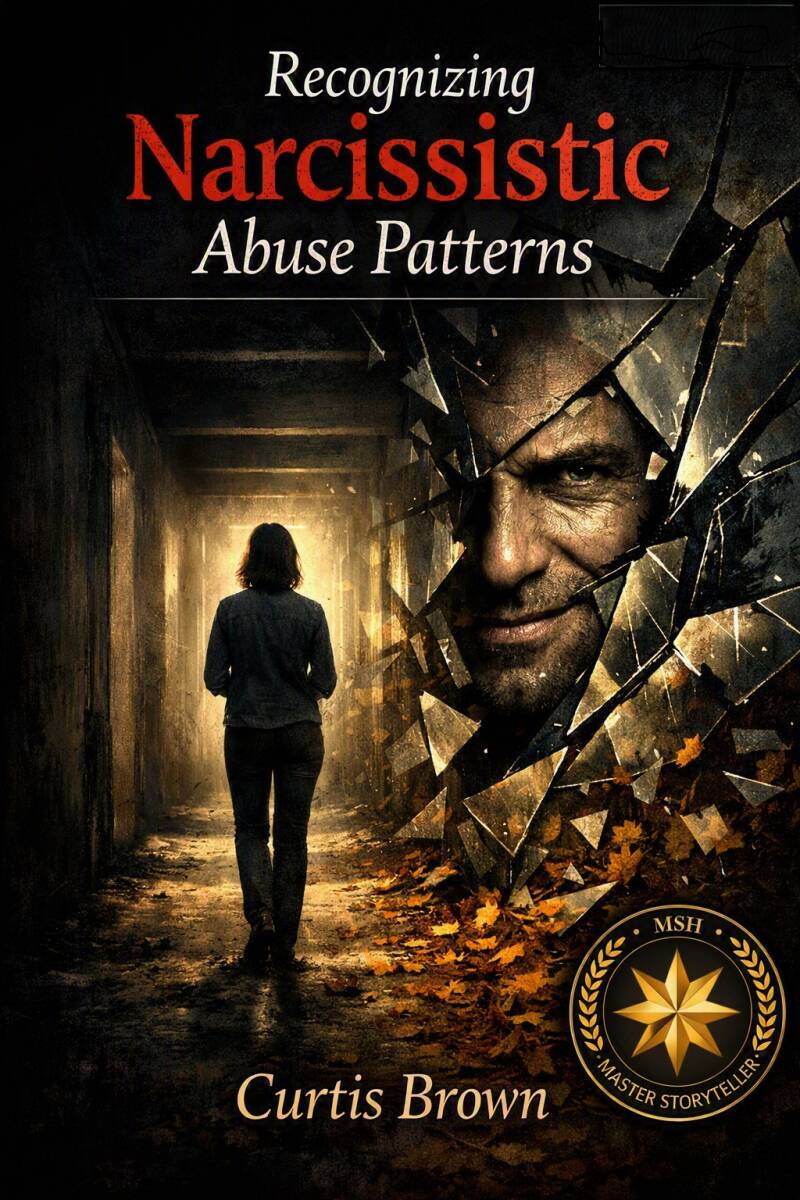
Narcissistic abuse doesn't start with cruelty. It starts with charm — the kind that feels like safety, attention, and love. But over time, that charm becomes control, and the survivor begins to lose sight of who they are.
Understanding these patterns is the first step toward freedom, and it matters more than most survivors realize going in, because narcissistic abuse rarely announces itself the way physical violence does. There's no single moment you can point to and say "that's when it started." Instead, it arrives as a slow erosion — a compliment that comes with a condition attached, a mood that controls the temperature of an entire room, a version of reality that shifts depending on what serves the narcissist in the moment. Without a name for what's happening, a survivor is left trying to make sense of chaos using logic that simply doesn't apply, and that mismatch is exhausting in a way that's hard to explain to anyone who hasn't lived it. You end up doubting your memory, your reactions, your right to be upset about things that would upset anyone. Not because you're irrational, but because you're being systematically taught that your perception of events can't be trusted.
This is exactly why recognizing the pattern matters so much: it replaces a vague, disorienting sense that "something is wrong with me" with a much more accurate, much more useful understanding — something is wrong with the dynamic. Once a survivor can identify specific behaviors instead of just feeling generally confused and depleted — the idealization that hooks you early, the devaluation that follows once you're invested, the triangulation that keeps you competing for approval, the gaslighting that rewrites events in real time — those behaviors stop feeling like unpredictable weather and start looking like a pattern with a shape, a rhythm, and, most importantly, an explanation that doesn't require blaming yourself.
That shift is where the actual healing can begin. It's nearly impossible to set a boundary against something you can't name, and it's nearly impossible to trust yourself again while you're still privately wondering if you're the problem. Understanding narcissistic abuse patterns doesn't undo the damage on its own, but it does something just as necessary first: it gives a survivor back the language to describe what happened to them, accurately, which is often the very first thing a narcissist's control took away.
Prayers,
Curtis
Add comment
Comments