“You teach people how to treat you by deciding what
you will and won’t accept.”
~ Anna Taylor
“You have to love and respect yourself enough to not
let people use and abuse you.”
~ Jeanette Coron
I understand that boundaries get blurred and hard to set, especially in a relationship. We think or feel that being controlled is because they care for us or have our best interests in mind.
Awhile back I wrote a book about why people don't intervene, and I discuss devious strategies that people use to gaslight you and make you feel unsure of yourself.
To be honest it was one of my most difficult topics to write about. I wanted the book to be informative, yet the more I researched and discovered the more it bothered me. I cried and was upset and even pissed off that there was a system in how we were coerced into submission.
Even today as I stare at the book sitting on my shelf. I want the world to know and recognize the system people use to manipulate and control us.
It is why I brought up boundaries; I want you to KNOW that there are dangerous people in our world who know how to use the system.
More importantly I exposed their system and pulled back the proverbial curtain, to show you what we can do to stand up for ourselves.
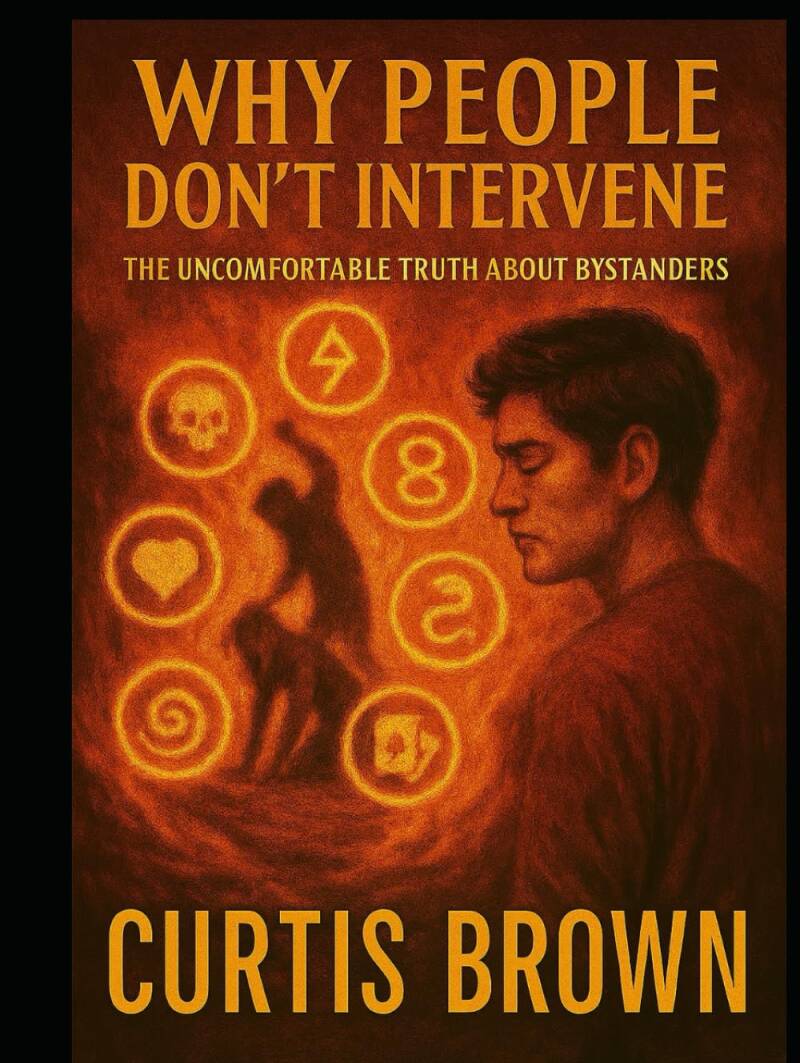
**WARNING** This book is extremely powerful and is intended to help survivors and advocates understand the power of abuse! Please read at your comfortable speed and take what you need.
The Question That Haunts Us
"I knew something was wrong. Everyone knew. Why didn't anyone do anything?"
This is the question that echoes through survivor testimonies, court transcripts, investigative reports, and private confessions. It's the question asked by children who were abused while teachers, coaches, and neighbors watched. By domestic violence victims whose friends and family knew but stayed silent. By workplace harassment survivors whose colleagues witnessed but said nothing. By elderly people neglected in care facilities with staff all around them.
Why didn't anyone help?
It's also the question that haunts witnesses years after the fact. The coworker who saw harassment but didn't report it. The neighbor who heard domestic violence through the walls but never called police. The family member who suspected child abuse but convinced themselves they were imagining things. The colleague who knew about financial exploitation but didn't want to get involved.
Why didn't I do something?
This book exists in the space between these two questions—between victims asking "why didn't you help?" and witnesses asking "why didn't I help?" Between the abandonment survivors experience and the paralysis witnesses feel.
This book is for the witnesses. For anyone who has ever known or suspected that someone was being harmed and struggled with what to do about it. For anyone who's ever stayed silent and wondered why. For anyone who wants to intervene but doesn't know how. For anyone working in systems that respond to abuse and wrestling with how to do better.
This book is also for survivors who want to understand why the people around them didn't help—not to excuse that failure, but to make sense of something that often feels incomprehensible.
I added a warning, realizing that understanding why people do nothing can be very unsettling. I know, I'm the author and it bothered me understanding what happens in the real world.
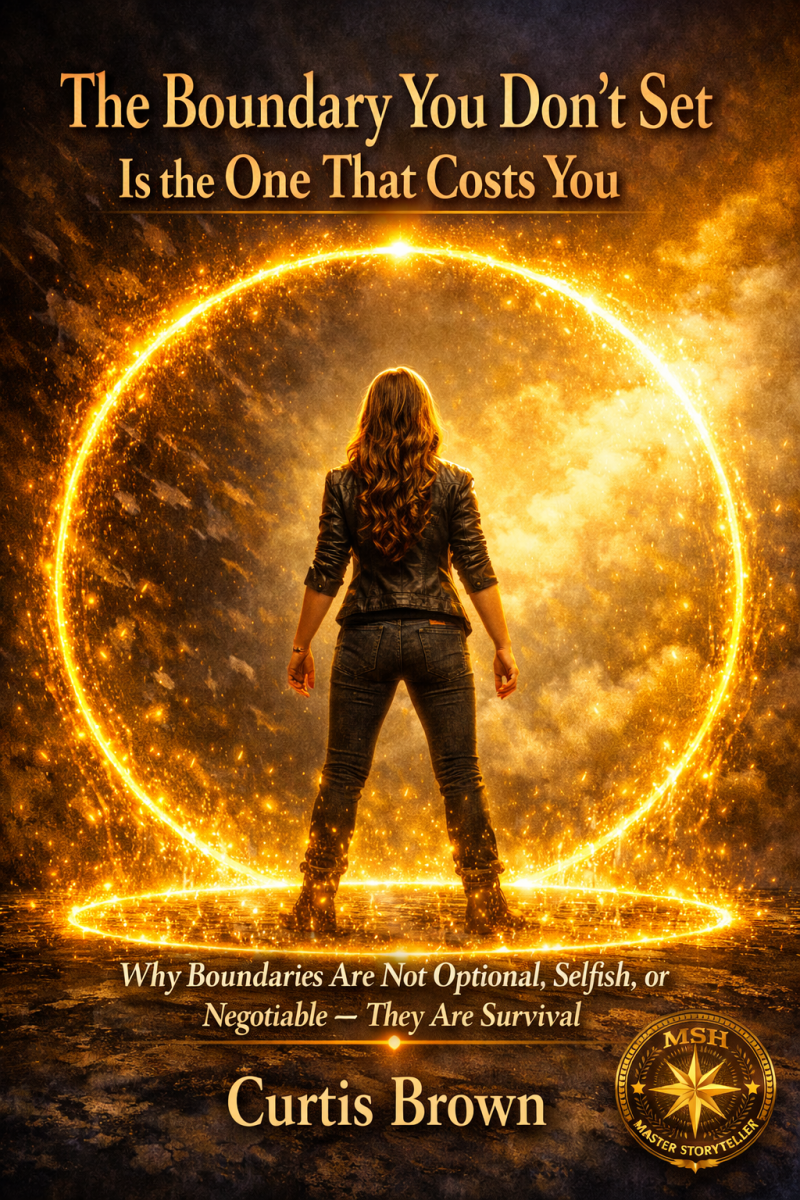
The Boundary You Don’t Set Is the One That Costs You ~
Why Boundaries Are Not Optional, Selfish, or
Negotiable — They Are Survival
I want to start with something you may not want to hear.
If you struggle to set boundaries, it is not because you are too kind, too patient, or too forgiving. I know that is the story you have probably told yourself, and I know other people have probably told it to you too, usually as a compliment that was actually a quiet request for you to keep absorbing what they were not willing to stop giving.
The truth is harder than that story. You struggle to set boundaries because somewhere, at some point, you learned that setting them was dangerous.
Maybe a boundary was met with rage. Maybe it was met with punishment, withdrawal, guilt, or the particular cruelty of someone twisting your need for safety into evidence of your selfishness. Maybe you learned, in the specific and repeated way that trauma teaches lessons, that the safest thing you could do was disappear your own limits before someone else could violate them — because at least then the violation felt like your choice instead of theirs.
That was not a character flaw. That was a survival strategy. And I need you to understand, clearly and without ambiguity, what I am about to tell you next:
The strategy that kept you safe then is the same one putting you at risk now.
— — —
What a Boundary Actually Is
A boundary is not a wall. It is not punishment. It is not coldness, rejection, or the withholding of love. I want to be precise about this because the word has been so badly misused — by people who benefit from you not having any — that many survivors carry a distorted definition that makes boundaries feel like something cruel they are doing to others, rather than something necessary they are doing for themselves.
A boundary is information. It is the clear, honest communication of what you need in order to remain safe, respected, and intact in a relationship. It tells another person where you end and they begin. It says: this is what I can give, this is what I cannot, this is what I will not tolerate, and this is what happens if that limit is crossed.
That is not cruelty. That is clarity. And clarity is one of the most protective forces available to a person who has lived through environments where the rules kept changing, where safety was unpredictable, where the people who should have respected your limits treated them as obstacles to override.
You are not required to justify a boundary to make it valid. You are not required to make it palatable to the person who benefits from you not having one. A boundary that needs someone else's permission to exist is not a boundary. It is a request.
— — —
Why This Is Harder for Survivors
I am not going to pretend this is the same conversation for everyone.
For a person who has survived abuse — particularly sustained abuse inside a relationship or a home — boundaries were not simply undervalued. They were actively, deliberately dismantled. That is not an accident of how abusive dynamics happen to unfold. It is frequently the mechanism by which control is established and maintained.
An abuser does not just cross a boundary once. They test it, push against it, punish the person who holds it, and reward the person who collapses it — until the lesson is fully learned: your limits do not matter here, and asserting them will cost you more than abandoning them. Over time, many survivors stop setting boundaries altogether, not because they no longer have needs, but because the cost of expressing those needs became higher than the cost of suppressing them.
If that is your history, then your difficulty with boundaries is not a personal failing to be corrected through better communication techniques. It is a trained response to a genuinely dangerous environment. Your nervous system learned, accurately, that boundaries were unsafe in that context.
The problem is that the lesson does not automatically update when the context changes.
You can be safe now — genuinely, structurally safe — and still carry a body and a mind that respond to the prospect of setting a limit as though the old danger were still present. The racing heart before you say no. The apologizing after you have already explained yourself fully. The rehearsing of a boundary for days before you can bring yourself to state it, and the collapse of it the moment the other person pushes back even slightly.
That is not weakness. That is a nervous system doing exactly what it was trained to do. And retraining it is real work — not a flaw you talk yourself out of in a single moment of resolve, but a practice you build, one boundary at a time, in low-stakes situations first, until the evidence accumulates that setting a limit does not produce the catastrophe your body has been bracing for.
— — —
The Cost of Not Setting Them
I want to be direct about this, because I think the cost of boundarylessness is consistently underestimated, even by people who are otherwise deeply self-aware.
Every boundary you do not set is not a neutral absence. It is an active cost — paid in resentment that accumulates silently until it erupts disproportionately. Paid in exhaustion, because a life without limits is a life perpetually available to other people's demands. Paid in the slow erosion of your own sense of self, because a self with no boundaries has no edges — and a self with no edges eventually has difficulty knowing where it begins, what it actually wants, and who it is when no one else is in the room making demands of it.
It is also paid, in the most serious cases, in safety itself.
Boundaries are one of the clearest tools available for identifying who is safe to be close to and who is not. A safe person, when you set a limit, may be disappointed. They may need a moment to adjust. But they will, ultimately, respect it — because respecting your limits is what safety actually looks like in practice, not just in theory.
An unsafe person will not. They will push. They will punish. They will reframe your boundary as betrayal, as coldness, as evidence that you do not really love them. That reaction is not incidental information. It is some of the most important information you will ever receive about a relationship — and boundaries are how you access it.
If a relationship cannot survive your boundaries, it was never built on your safety to begin with.
— — —
What Strength Actually Looks Like
I want to correct something that gets quietly taught, over and over, in ways that are rarely named directly: the idea that strength means endurance. That the strong person is the one who tolerates the most, absorbs the most, gives the most without asking anything in return.
That is not strength. That is depletion wearing strength's clothing.
Real strength is the boundary stated clearly, even when your voice shakes while you say it. It is the limit held even when the other person's disappointment feels unbearable. It is the willingness to be seen as difficult, as too much, as not as agreeable as you used to be — because the agreeableness was never actually serving you. It was serving the comfort of people who benefited from your silence.
Strength is not the absence of fear when you set the boundary. Nearly everyone who has survived an environment where boundaries were dangerous still feels fear when they set one now. Strength is setting it anyway. Not because the fear has resolved, but because you have decided that your safety, your needs, and your right to take up space matter more than the discomfort of the person who would prefer you stayed small.
— — —
How to Begin
I am not going to tell you to simply start setting boundaries, as though the work were that simple. It is not. But here is where the practice actually begins, and where it can begin safely.
Start small, and start where the stakes are lowest. Not with the most dangerous or significant relationship in your life — with a low-stakes interaction where the cost of pushback is minimal. A scheduling boundary with an acquaintance. A simple no to a request that does not matter much. The goal is not the size of the boundary. The goal is the evidence: that you can set a limit and survive the discomfort of doing so.
Expect the discomfort, and do not mistake it for danger. Your body may respond to even a small boundary with the same alarm it would have produced in a genuinely dangerous situation. That alarm is real, but it is not always accurate information about your present safety. Learning to feel the discomfort and act anyway — because the present circumstance is not the past one — is the specific, repeated work that retrains the nervous system over time.
Use clear, simple language. A boundary does not require an essay of justification. “I am not available for that.” “I need you to ask before you do that again.” “That does not work for me.” The fewer words you use to explain yourself, the less room there is for someone to argue you out of your own limit.
Notice who respects it and who does not. This is not optional information. It is some of the most important data you will ever collect about the people in your life. Pay attention. Let it inform you.
Build a circle that reinforces the practice. Boundaries are easier to hold when you are not holding them alone. Find — or build, if you have to — relationships with people who respect your limits as a matter of course, who do not require you to fight for basic respect. Let those relationships become the evidence base that boundaries are not only survivable, but the foundation of the safety you deserve.
— — —
You Are Allowed
If no one has said this to you directly, I am saying it now, as clearly as I know how:
You are allowed to have limits. You are allowed to say no without justifying it to someone else's satisfaction. You are allowed to disappoint people in service of your own safety. You are allowed to be inconvenient. You are allowed to take up space you were once taught was dangerous to occupy.
None of that makes you difficult, cold, or unkind. It makes you someone who has finally learned the lesson that should have been obvious from the beginning, and that someone, somewhere along the way, worked very hard to make sure you never learned: that your safety was never supposed to be negotiable.
A boundary is not the end of connection. It is the beginning of the kind of connection that can actually hold you.
Start there. Start small. Start today.
You are not being difficult.
You are finally being safe.
— — —
At Mandie Safe Haven
we know how hard this work is, and we know it is not work anyone should have to do alone. If setting boundaries feels impossible right now, or if you are not sure whether the relationships in your life can survive your safety, reach out. We are here for exactly this.
Prayers,
Curtis Brown
Mandie Safe Haven
Add comment
Comments