The Identity Compass ~
You Are Not Who They Made You
Identity After Trauma — and the Hard Work of
Becoming Who You Actually Are
Let me be direct with you from the start.
What happened to you changed you. It was supposed to. That is what trauma does — it does not leave you the way it found you. It reaches into the most fundamental parts of how you understand yourself and rearranges them, sometimes violently, sometimes so quietly that you do not notice the rearrangement until you are already living in the aftermath of it.
That is not weakness. That is biology. That is the human nervous system doing exactly what it was designed to do when safety disappears and survival becomes the only available priority.
But here is what I need you to hear — and I am not going to soften this, because you deserve honesty more than you deserve comfort right now:
What trauma did to your identity is not the final word on who you are.
The version of yourself that formed under those conditions — the one built around managing threat, avoiding pain, making yourself small enough to survive — that version was necessary. It kept you alive. It was the right response to the wrong circumstances.
It is not who you are. And it is not who you have to remain.
— — —
What Trauma Does to the Self
Identity is not a fixed thing. Most people operate as though it is — as though who they are is a settled fact, as stable and immovable as a birth date or a blood type. But identity is constructed. It is assembled, piece by piece, from the experiences we have and the meanings we make of them, from the things people told us about ourselves and the degree to which we believed them, from the roles we were assigned and the ones we claimed, from what we survived and what we concluded about ourselves as a result of surviving it.
Trauma disrupts that construction at its foundation.
When something happens to you that should not have happened — abuse, violence, betrayal by someone who was supposed to protect you, the systematic erosion of your sense of safety and worth — it does not just hurt you. It teaches you things about yourself that are not true. It installs beliefs that feel like facts. That you are not safe. That you cannot trust your own judgment. That you are responsible for what was done to you. That the version of yourself that was present when the worst things happened is the true version — the one that should be believed over any other.
These are not character flaws. They are survival adaptations. They are the conclusions a mind draws when it is trying to make sense of something senseless, trying to find agency in a situation where agency was taken away.
But they are not true. And living as though they are — building a life on the foundation of an identity that was shaped by someone else's choices, someone else's cruelty, someone else's failure to protect you — is one of the most significant ways that trauma continues to cost you long after the original harm has ended.
— — —
The Identity You Built to Survive
I want to talk about something that does not get named often enough.
Most people who have been through trauma — especially sustained trauma, the kind that happens inside relationships and homes rather than in single catastrophic events — develop an identity that is organized around the trauma itself. Not because they chose to. Because the trauma was so present, so defining, so all-consuming that it became the context in which every aspect of the self was formed.
This survival identity has a specific shape. It tends to be hypervigilant — always scanning for threat, always reading the room, always prepared for the moment when safety proves to be an illusion. It tends to be self-minimizing — having learned that taking up space, expressing needs, asserting preferences, or being visible in any significant way invited harm. It tends to be externally oriented — defining worth through the approval of others, through the management of other people's emotions, through the exhausting project of being whatever the most dangerous person in the room needed you to be.
If you recognize yourself in that description, I need you to understand something:
That identity saved your life. And it is costing you your future.
Because the strategies that protected you then are not the strategies that will build the life you deserve now. The hypervigilance that kept you safe in a dangerous environment will keep you from trusting in a safe one. The self-minimizing that reduced your visibility when visibility was dangerous will keep you from claiming space when claiming space is exactly what your life requires. The external orientation that helped you survive someone who could not be safely disagreed with will keep you from knowing — really knowing — who you are and what you want when that person is no longer in the room.
Surviving was not the end of the work. It was the beginning of it.
— — —
The Hardest Truth About Rebuilding
I am not going to tell you that rebuilding your identity after trauma is a journey that will feel good throughout. It will not. I am not going to tell you that healing is linear, or that there is a clear finish line, or that one day you will wake up and the old self will simply be gone and the new one will have arrived fully formed in its place.
That is not how this works. And you deserve to know that before you begin, not after you are already in the middle of it and wondering why it is harder than the books suggested.
Here is what rebuilding actually looks like:
It looks like noticing, for the first time, that the beliefs you have been living inside are not facts about you — they are stories you absorbed in conditions designed to make you believe them. That is not an insight that arrives once and stays. It arrives, and then the old beliefs come back, and then the insight has to be chosen again. And again. And again, in the specific moments when the old identity feels safest and the new one feels most exposed.
It looks like grief. Real grief — for the years spent inside an identity that was not yours, for the version of yourself that did not get to develop because the conditions for development were never safe, for the things you did not do and the person you did not become because surviving consumed everything that building would have required.
It looks like the discomfort of not knowing who you are yet. There is a period in the rebuilding process — and it can last longer than you expect — where the old identity no longer fits and the new one is not yet fully formed. That in-between space is genuinely uncomfortable. It is supposed to be. It is the space where the most important work happens.
You cannot build a new self inside the same story. At some point, you have to put the old story down.
Not deny it. Not pretend it did not happen. Not perform a recovery you have not yet lived. But put it down as the defining narrative — the story that explains everything, that precedes every introduction, that sits in the room with you in every relationship and every opportunity and every moment when you are deciding whether you are allowed to want more than what you have been given.
You are allowed. You have always been allowed.
— — —
What Reclaiming Your Identity Actually Requires
It requires honesty first. Not the performed honesty of publicly declaring your healing, but the private, uncomfortable honesty of looking at which parts of how you are currently living still belong to the survival identity and which parts belong to the person you are actually choosing to become.
Those are different questions. And most people, understandably, avoid the first one because the answer is harder to live with than the question.
Ask it anyway. What am I still doing because it was necessary then, not because it serves me now? What am I still avoiding because it was dangerous then, not because it is dangerous now? What am I still believing about myself that was installed by someone who needed me to believe it, not someone who actually knew me?
It requires community. Not the community of people who confirm the survival identity — who know you only as the person the trauma made, who relate to you through the lens of what you went through — but the community of people who can see the person you are becoming and will hold that vision with you when you cannot hold it yourself.
That community may not be the one you currently have. And building a new one — or allowing old relationships to shift as you shift — is one of the most specific and necessary forms of courage that rebuilding requires.
It requires action. This is the part that nobody wants to hear, because it would be so much easier if identity rebuilt itself through insight alone. It does not. You do not become someone different by understanding that you should become someone different. You become someone different by acting like that person — imperfectly, repeatedly, in real conditions with real stakes — until the acting becomes being.
The first time you set a boundary with someone who has always benefited from your boundarylessness, you are not yet a person who sets boundaries. You are a person who set one boundary, once, with enormous effort, and survived the discomfort of doing so. The second time is slightly easier. The tenth time, it is part of who you are.
Identity is not declared. It is built. One act at a time, in the specific and ordinary moments that no one else sees, over the sustained period of time that real change actually requires.
— — —
To the Person Who Is Not Sure They Are a Survivor
I want to speak directly to the person reading this who is uncertain whether any of this applies to them.
Maybe you have not experienced what the word trauma typically conjures. Maybe nothing dramatic happened. Maybe your story does not feel significant enough to warrant the kind of attention this post is giving to identity and survival and rebuilding. Maybe you are simply — uncertain. Unclear about who you are and what comes next and whether the person you have been up to this point is the person you actually want to continue being.
That uncertainty is not a lesser version of this experience. It is a version of it.
The person who has never experienced overt trauma can still be living inside an identity that was built for them rather than chosen by them — assembled from the expectations of families and cultures and institutions that had a version of them in mind before they ever had the chance to develop one of their own. The absence of a dramatic wound does not mean the absence of a self that was formed under conditions that did not fully serve who you actually are.
If you are reading this and feeling, in some quiet and persistent way, that who you have been is not entirely who you are — that is enough. That is sufficient. That is the beginning of exactly the kind of work this post is pointing toward.
You do not have to earn the right to rebuild your identity by having survived something severe enough. You only have to be honest enough to admit that the current version of yourself is not the final one.
— — —
You Are Not Who They Made You
I want to close where I opened.
What happened to you changed you. It shaped the self-concept you have been living inside — sometimes for years, sometimes for decades — in ways that have had real and lasting costs. That is true. It deserves to be named, not minimized.
And it is not the end of the story.
You are not the identity trauma installed in you. You are not the beliefs that were formed in conditions designed to diminish you. You are not the survival strategies that protected you when protection was all that was available. You are not the story someone else wrote for you, however convincingly they insisted it was true.
You are the person who is still here. Still reading. Still, in some part of yourself — however quiet, however hard to access on the difficult days — still reaching toward a version of yourself that the trauma could not fully extinguish.
That reaching is not naive. It is not denial. It is the most accurate thing about you.
Who you become from here is not determined by what was done to you.
It is determined by what you do with what remains.
And what remains — the resilience, the knowledge, the specific and hard-won understanding of what human beings are capable of surviving and building from — is more than enough to begin.
— — —
At Mandie Safe Haven
we exist for this work. Not to tell you who to become — but to walk alongside you as you figure that out for yourself. If any part of this post landed somewhere real for you, you are not alone in it. Reach out. That is what we are here for.
Prayers,
Curtis Brown
Mandie Safe Haven

I frequently get asked, "Why do you write so much?"
I write to share stories and insights for helping people. There are people who struggle every day, not sure where to go or what to do. They stay because no one has offered help or guidance in building their trust, to see that their lives can be better. Not perfect, but more comfortable.
People fear the unknown and create their own comfort zone, believing that things will change or get better. BULLS**T!
There might be so called friends that try to minimize your pain, and become part of the trap that society puts us in.
You need to WAKE up and realize that if you want your life to change, you need to make a life-long comittment to make it happen.
No one else is going to force you to change your beliefs, only you can recognize them for what they are and adopt more powerful and fulfilling beliefs that will change your life.
It reminds me of a saying "You can lead a horse to water, but you cannot make it drink." I am here to answer certain questions, if possible, but more importantly, we are here to listen.
Our community is built around caring, understanding, emotional support and love.
It is because of the questions and comments you make that I strive to give my very best advice, and much of it has turned into books to help others with similar problems or circumstances.
Before you can change your beliefs, you must understand where they came from and how to adopt new ones.
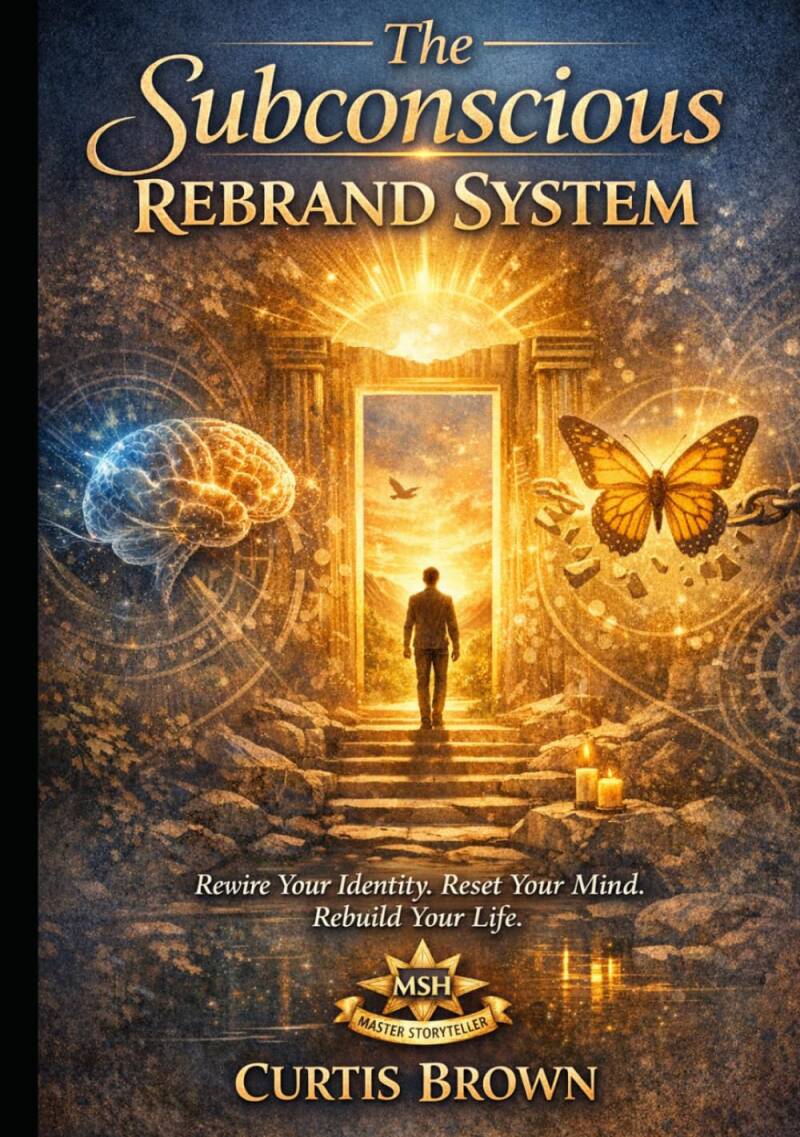
These two books go together, after completing a powerful and transformative book, I realized there is a different side to this magnificent story and wanted to share with you.
One of the strongest elements of the book is how it reframes healing.
Instead of asking:
“What is wrong with you?”
…it asks:
“What happened to you, and what were you conditioned to believe about yourself?”
That shift alone creates enormous emotional relief
The book provides actionable methods for subconscious reprogramming, mental reconditioning, emotional awareness, identity rebuilding, visualization, internal language shifts, repetition techniques, belief rewiring, and daily reinforcement systems that help readers actively participate in their own transformation journey.
The concepts around subconscious loops and identity conditioning were incredible. Explains how many people unknowingly live from inherited mental scripts:
- “I’m not enough.”
- “People always leave.”
- “I’ll fail anyway.”
- “I can’t trust anyone.”
- “I don’t deserve happiness.”
This book carefully shows how those scripts were often installed through years of repetition and emotional experiences rather than the objective truth.
This book permits readers to stop identifying with their programming.
That is a life-changing message.
The final chapters were extraordinary. The closing message about never being broken — only programmed — brought the entire book full circle in a way that felt emotional, hopeful, and empowering without becoming cliché.
I also loved the emphasis on:
- subconscious healing,
- identity transformation,
- emotional regulation,
- mental resilience,
- self-awareness,
- nervous system safety,
- thought reconditioning,
- personal growth,
- trauma-informed healing,
- mindset mastery,
- and becoming conscious of inherited beliefs.
-
His book deserves to be read slowly and revisited multiple times because many of the insights become deeper after reflection.
If you struggle with:
- anxiety,
- overthinking,
- emotional numbness,
- self-sabotage,
- low self-worth,
- toxic relationship patterns,
- fear of failure,
- negative self-talk,
- subconscious fear,
- trauma responses,
- emotional exhaustion,
- or feeling “stuck” in life…
-
…this book will likely resonate with you profoundly.
Add comment
Comments