The Moment Before the Rise: What Nobody Tells You About Getting Back Up ~
Everyone loves the comeback story.
We celebrate the athlete who returns from injury, the entrepreneur who rebuilds after bankruptcy, the person who walks out the other side of grief or addiction or failure and somehow seems more themselves than before. We highlight the rise. We frame it as triumph. We turn it into a motivational poster.
But there's a moment nobody talks about — the one that happens before any of that.
The moment when you're still on the ground. When the outcome is still unclear. When the person you were before the fall no longer quite fits, but the person you're becoming hasn't shown up yet.
That moment — raw, disorienting, and profoundly human — is what this post is about.
The Gap Nobody Mentions
When something significant breaks — a relationship, a career, a belief you built your life around, a version of yourself you worked hard to become — there's an instinct to rush toward resolution.
We want the lesson. We want the silver lining. We want to know, as quickly as possible, that this is going somewhere worth going.
And so we skip the gap.
We perform recovery before we've actually begun it. We post about the lesson before we've lived it. We tell people we're fine, we tell ourselves we're fine, and we quietly hope that saying it enough times will make it true.
It won't.
The gap — that uncertain, uncomfortable space between who you were and who you're going to be — isn't something to be escaped. It's something to be moved through. And moving through it honestly is the only way the other side means anything at all.
What the Gap Actually Feels Like
If you've been there, you know it's not dramatic. It's quieter than that — and somehow harder because of it.
It feels like waking up in the morning and not quite recognizing the shape of your own life. Like reaching for an identity that used to fit and finding it no longer does. Like standing in a room where all the furniture has been moved two inches — nothing is missing, but nothing is quite right either.
There's grief in it, even when the loss isn't one the world would formally recognize. Grief for the version of yourself that believed things would go differently. Grief for the future you had already started living in your imagination. Grief, sometimes, for the certainty itself — because even a wrong certainty is more comfortable than open sky.
And underneath the grief, if you're honest, something else. Something quieter and harder to name.
The faint, unsettling awareness that this might be changing you — and you don't yet know into what.
Why We Rush — And What It Costs Us
The pressure to move quickly through difficulty is everywhere.
Culture rewards resilience as performance. Social media compresses the arc of recovery into a highlight reel. The people around you, even the ones who love you most, are often more comfortable with your strength than your struggle — so you learn to lead with the former and quietly carry the latter.
But rushing the gap has a cost.
When we skip the disorientation, we miss the information it carries. When we paper over the grief, it doesn't disappear — it just goes underground, showing up later in ways we don't immediately connect to the original wound. When we perform recovery instead of doing it, we rebuild on an unstable foundation — and wonder why the same walls keep falling.
The gap is uncomfortable because it's working. Something real is being processed, sorted, released. The groundlessness you feel isn't weakness. It's the feeling of old structures coming down to make room for something more honest.
What It Means to Sit in It
Sitting in the gap doesn't mean staying down. It doesn't mean surrendering to the fall or building a permanent home in the rubble.
It means being willing to be uncertain for a little while. To not know yet. To resist the pressure to have it figured out before you actually do.
It looks like this:
Letting yourself feel the full weight of what happened without immediately reaching for the lesson. Telling someone the truth — not the edited version, not the version where you're already bouncing back, but the real version where you don't yet know what comes next. Sitting with questions that don't have answers yet instead of forcing conclusions that aren't ready.
It means trusting — and this is the hard part — that the not-knowing is temporary. That the gap is a passage, not a destination. That you don't have to have the story figured out to keep living forward through it.
The Identity Waiting on the Other Side
Here's what's true, even when it doesn't feel true:
The person who emerges from genuine difficulty — who didn't skip the gap, who didn't perform their recovery, who sat in the disorientation long enough to actually move through it — is not a diminished version of who they were before.
They are more specific. More honest. Harder to rattle and more willing to be moved. They know something about themselves that only the ground can teach — that they have a floor, and it holds, and it was there all along even when they couldn't feel it.
The rise, when it comes, doesn't look like going back. It looks like going forward into something you couldn't have become without the fall.
But it starts here. In the quiet. In the gap. In the moment before.
A Note to Anyone Currently in the Gap
If you're reading this from inside that disorienting space — if the fall is recent and the other side is not yet visible — this is not the part of the story where you need to be further along than you are.
You don't need to have the lesson yet. You don't need to be grateful for it yet. You don't need to perform strength you're still rebuilding.
You just need to keep moving — even slowly, even uncertainly — and trust that the ground beneath your feet is more solid than it currently feels.
The rise is coming.
But it will mean more because you didn't rush it.

The Moment Before the Rise
There’s a silence that follows every fall — a breath where the world stops asking you to move. In that stillness, you meet yourself again. Not the self that was knocked down, but the one who refuses to stay there. Getting back up isn’t a single motion; it’s a remembering. You rise not because you’re unbroken, but because you’ve learned how to stand with the cracks showing.
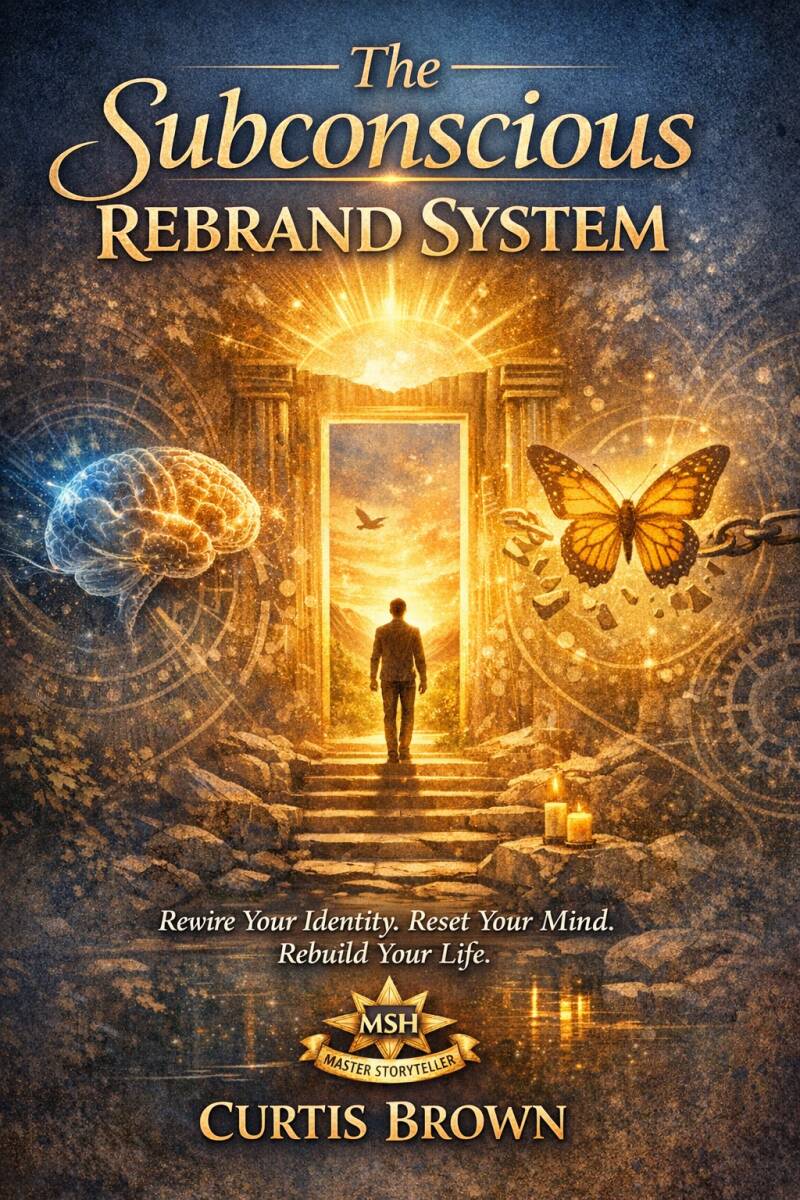
The concepts around subconscious loops and identity conditioning were incredible. Explains how many people unknowingly live from inherited mental scripts:
- “I’m not enough.”
- “People always leave.”
- “I’ll fail anyway.”
- “I can’t trust anyone.”
- “I don’t deserve happiness.”
This book carefully shows how those scripts were often installed through years of repetition and emotional experiences rather than the objective truth.
This book permits readers to stop identifying with their programming.
That is a life-changing message.
The final chapters were extraordinary. The closing message about never being broken — only programmed — brought the entire book full circle in a way that felt emotional, hopeful, and empowering without becoming cliché.
I also loved the emphasis on:
- subconscious healing,
- identity transformation,
- emotional regulation,
- mental resilience,
- self-awareness,
- nervous system safety,
- thought reconditioning,
- personal growth,
- trauma-informed healing,
- mindset mastery,
- and becoming conscious of inherited beliefs.
-
His book deserves to be read slowly and revisited multiple times because many of the insights become deeper after reflection.
If you struggle with:
- anxiety,
- overthinking,
- emotional numbness,
- self-sabotage,
- low self-worth,
- toxic relationship patterns,
- fear of failure,
- negative self-talk,
- subconscious fear,
- trauma responses,
- emotional exhaustion,
- or feeling “stuck” in life…
-
…this book will likely resonate with you profoundly.
Prayers,
Curtis
Add comment
Comments