Finding Your Place: Small Steps Toward Meaningful Connection After Abuse ~
A guide for survivors navigating the journey back to belonging
There is a particular kind of loneliness that comes after abuse — not just the absence of people, but the feeling of standing just outside the glass, watching others connect with what seems like effortless ease. You want to be part of it. You’ve always wanted to be part of it. But something holds you back: a wariness that has kept you safe, a history that has quietly taught you that closeness comes with risk.
If that resonates with you, this post is written for you. Not to rush you. Not to tell you it’s simple. But to gently walk alongside you as you consider what it might look like to take a few small, meaningful steps toward connection — on your own terms, at your own pace.
Belonging vs. Fitting In: An Important Distinction
Before we talk about steps, let’s talk about the goal. There’s a meaningful difference between fitting in and belonging, and for survivors of abuse, that difference matters enormously.
Fitting in often asks you to shrink, adjust, or perform. It says: “Become more like us and we’ll accept you.” Belonging, on the other hand, says: “You can bring your whole self here.”
For someone who has spent years contorting themselves to survive an abusive relationship or environment, this distinction isn’t just philosophical — it’s healing. The goal of the steps ahead isn’t to help you become someone more palatable to the world. It’s to help you find spaces and people where you are genuinely welcomed as you are.
Why Connection Feels So Hard After Abuse
It’s worth acknowledging first: if connection feels difficult or even terrifying, that is not a flaw in your character. It is an intelligent, protective response to pain.
Abuse — whether emotional, physical, or psychological — often rewires the way we experience trust. When someone who was supposed to be safe became a source of harm, the nervous system learns to stay alert. It scans for danger in ordinary moments. It interprets warmth with suspicion. This is not weakness. It is survival.
Understanding this is the first act of compassion you can offer yourself. You are not broken. You adapted. And now, slowly, you can begin to adapt again — toward safety, toward openness, toward connection.
Small Steps That Actually Matter
None of these steps require you to be vulnerable before you’re ready. They are intentionally small, because small is where trust begins.
1. Start With Low-Stakes Interactions
A smile at a neighbor. A brief exchange with a barista. A kind comment in an online community you enjoy. These micro-moments of human contact might seem insignificant, but they are quietly doing something important: they are teaching your nervous system that connection can be safe, and that the world contains people who will not hurt you.
You don’t need to share your story. You don’t need to be ready for depth. Just show up in the smallest ways, and let that be enough for now.
2. Practice Receiving Kindness
This one sounds deceptively simple. It isn’t. Many survivors have learned to deflect care — to minimize compliments, refuse help, or immediately give back what is offered. Receiving feels unsafe because it creates a sense of debt, or because past “kindness” came with strings attached.
Start practicing the art of simply receiving. Let someone hold the door. Accept a compliment with a quiet “thank you” instead of an automatic dismissal. Allow a friend to do something nice without immediately repaying it. These small moments begin to build a new internal story: that you are worthy of care, and that care can be given freely.
3. Find Your “Same”
One of the gentlest paths into community is through shared interest. A hobby class, a book club, a volunteer organization, a faith community, or a walking group all provide a natural reason to be in the same room with people without the pressure of forced intimacy.
When you and another person are both focused on something outside yourselves — a project, a cause, a creative pursuit — connection can happen organically, without performance. You don’t have to be interesting or impressive. You just have to show up and participate in something you genuinely care about.
4. Let Consistency Do the Heavy Lifting
Fitting in doesn’t happen in a single conversation. It happens over time, through the quiet accumulation of familiar faces, shared jokes, and the comfort of being recognized. Showing up regularly — to the same class, the same group, the same volunteer shift — lets familiarity build without you having to force it.
Consistency says, “I keep coming back,” and that alone communicates something to others: that you are safe, that you are interested, that you are worth getting to know.
5. Allow Yourself to Be Known in Small Doses
You don’t have to share your history to make a real connection. Letting someone know what you’re passionate about, what makes you laugh, what you’re currently reading or watching or creating — that is connection too. Genuine intimacy is built in layers, not installments.
Share at the pace that feels right. A little more this week than last. A little more next month than this one. Trust that the right people will stay as more of you emerges, and they will.
6. Learn to Tolerate the Awkward
Awkwardness is one of the great universals of human social life. Everyone feels it. But for survivors, it can be easy to interpret an awkward moment as rejection, as proof that you don’t belong, or as a sign that something is wrong with you.
One of the bravest things you can do is to sit in the discomfort of an awkward exchange, resist the urge to flee, and simply let it pass. Most of the time, it does pass. And on the other side of awkward is often something warm.
Recognizing Relationships Worth Keeping
As you begin to open yourself to connection, it’s worth knowing what you’re looking for. After abuse, it can be hard to calibrate — some people may be drawn to familiar dynamics without realizing it, while others become so cautious that genuine warmth is difficult to trust.
Worthwhile relationships tend to share a few qualities. They are consistent — the person shows up reliably, not just in peak moments. They are reciprocal — there is a sense of balance, of give and take over time. They respect your boundaries — when you say no, the relationship doesn’t punish you for it. And they make space for you to be imperfect — to make mistakes without fear of losing the connection entirely.
You deserve all of these things. They are not too much to ask for.
Think in Terms of a Web, Not a Lifeline
One of the most important things to understand about healthy connection is that no single relationship should carry the full weight of your healing or your happiness. That is too much to ask of any one person, and it can inadvertently recreate dynamics of dependency that may feel familiar from abusive relationships.
Instead, think of yourself as building a web of connection — a friend who makes you laugh, a community that shares your interests, a mentor who offers guidance, perhaps a therapist or support group that holds space for your deeper work. Each thread is different. Each thread matters. And together, they create something strong enough to hold you.
You Don’t Have to Perform Belonging
The goal of all these small steps is not to help you pretend to belong until it feels real. It is to help you practice belonging until it actually becomes real — because belonging is a skill, and like all skills, it grows through gentle, repeated effort.
Every small moment of connection is evidence. Evidence to your nervous system that the world contains safe people. Evidence to your heart that you are someone worth knowing. Evidence to the part of you that has been hurt that healing is not only possible — it is already, quietly, underway.
Take the small step. And then the next one. You don’t have to see the whole path. You just have to be willing to begin.
If you or someone you know is dealing with the effects of abuse, please reach out to a trusted mental health professional or local support organization.
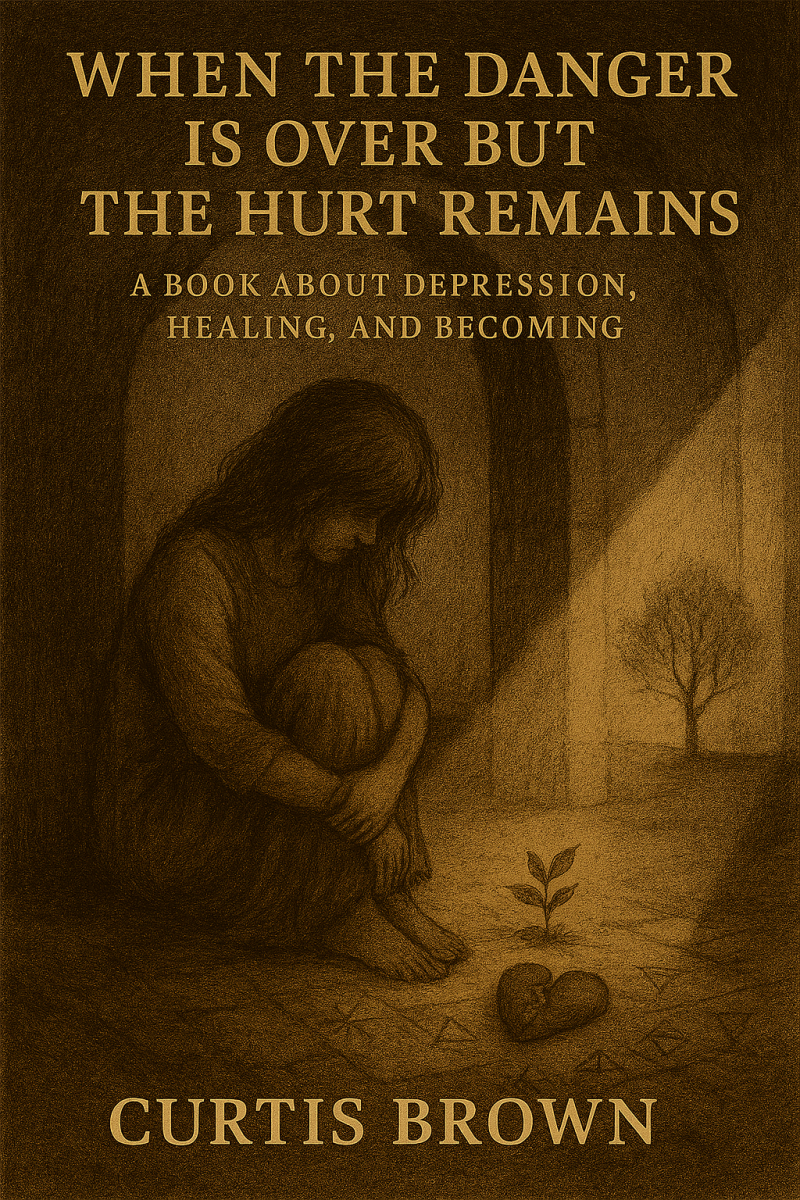
Most people feel that depression is just not smiling and being happy. That it a mindset, and not a real issue.
I wrote a book about a different way people see depression and how to gain agency back into your life.
What Depression Is and How It Affects People
Depression is more than sadness — it is a whole‑body experience that affects the mind, emotions, and nervous system. It often appears after long periods of stress, trauma, or survival, when the body finally stops bracing and begins to feel what it once had to suppress.
People experiencing depression may feel:
-
A deep exhaustion that rest doesn’t fix
-
Numbness or emotional flatness, as if the world has lost its color
-
Difficulty concentrating or making decisions
-
A sense of heaviness, both physically and emotionally
-
Loss of interest in things that once brought joy
-
Changes in sleep or appetite
-
A feeling of being disconnected from themselves or others
Depression can also distort how a person sees themselves. It can make simple tasks feel overwhelming, and it can convince someone that they’re failing, even when they’re doing their best to survive.
But depression is not a character flaw or a lack of strength. It is often the body’s way of processing long‑delayed pain, recalibrating after years of stress, or recovering from experiences that demanded too much for too long. Healing is possible, and depression is part of that healing process — not a sign that someone is broken, but a sign that their system is finally trying to repair what was once too heavy to feel.
Prayers,
Curtis
Add comment
Comments