When Pain Becomes a Compass
Many of us don't realize that pain, although unbearable at times, can be a catalyst for understanding fulfillment and purpose in our lives.
We all experience pain and trauma in our lives that that can be life changing. We need to acknowledge the pain, yet ask different questions about what we can do about it.
Most of the time it is asking different questions and peering through a different lens to uncover how it can make us stronger.
Here are stories involving pain.
1. When Pain Becomes a Compass
Mara didn’t realize how quiet her life had become until the night everything went wrong.
The house was still. Too still. The kind of silence that isn’t peaceful—it’s hollow. She stood in the kitchen holding her phone, reading the same message over and over, each word landing like a small, precise cut. It wasn’t just what had been said. It was what had been confirmed.
She had trusted someone who never intended to be careful with her trust.
For a long time after, Mara tried to move on the way people are supposed to. She stayed busy. She said she was fine. She told herself it wasn’t a big deal. But the ache didn’t fade—it sharpened. Every conversation felt heavier. Every room felt slightly unsafe. Her body knew something her mind kept trying to override.
The pain wasn’t loud. It was persistent.
Eventually, it forced her to slow down.
She began noticing what hurt the most. Not the argument. Not the ending. What hurt was how easily her boundaries had been crossed. How often she had dismissed her own discomfort to keep the peace. How long she had confused being agreeable with being valued.
That’s when she understood: the pain wasn’t random.
It was pointing.
Mara started asking different questions—not Why did this happen to me? but Why did this hurt so deeply? And the answer surprised her. It hurt because she cared about honesty. Because she believed in mutual respect. Because trust mattered to her more than she had ever admitted out loud.
Those values had always been there. But pain was the first thing that made them impossible to ignore.
In the weeks that followed, she made small changes that felt enormous. She stopped explaining herself to people who didn’t listen. She paused before saying yes. She allowed discomfort to exist instead of rushing to smooth it over.
With every boundary, the pain softened—not because it disappeared, but because it had done its job.
For the first time, Mara wasn’t shaping her life around what kept others comfortable. She was shaping it around what kept her whole.
And something unexpected happened.
As she honored her values, clarity followed. The things that drained her lost their grip. The things that mattered gained weight. Her choices became simpler, not easier—but truer.
She realized then that pain hadn’t arrived to punish her.
It arrived to reintroduce her to herself.
Pain had been the compass all along—pointing her back to the values she was always meant to live by.
2. The Day Everything Stopped
(Pain as an Interruption, Not a Punishment)
Jonah had always been good at keeping life moving.
If something hurt, he worked longer. If something felt wrong, he scheduled over it. His calendar was full enough to convince him that momentum was the same thing as direction.
Until the morning his body refused to cooperate.
It wasn’t dramatic. No sirens. No collapse. Just a quiet dizziness that wouldn’t pass and a doctor who said, gently but firmly, “You need to stop.”
Stop was not a word Jonah recognized.
The first week felt unbearable. Without motion, everything he’d been avoiding caught up to him. The exhaustion. The resentment. The sense that he had been living a life built on obligation instead of intention.
Pain, he realized, hadn’t arrived to destroy his progress.
It had arrived to interrupt a path that was leading nowhere he wanted to go.
As the days slowed, Jonah began to hear questions he’d drowned out for years. What am I building? Who is this for? What part of me keeps getting postponed?
The answers weren’t immediate, but they were honest.
When he returned to work, it wasn’t with the same pace—but with clarity. He reduced what didn’t matter. He protected what did. His life didn’t shrink. It finally had room to breathe.
Sometimes pain doesn’t block the road.
It closes it—so you’re forced to find the one that’s actually yours.
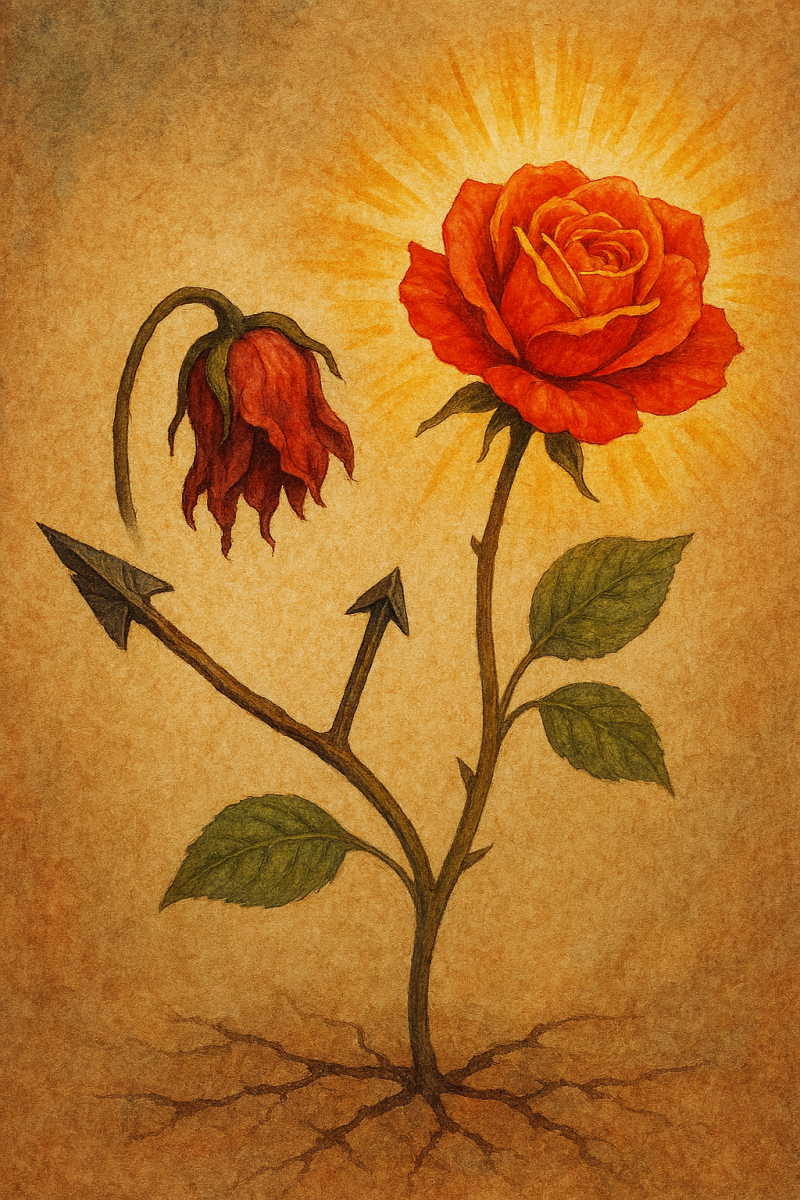
3. What She Stopped Carrying
(Pain Teaches Boundaries, Which Create Meaning)
Lena had been the reliable one for as long as she could remember.
She anticipated needs before they were spoken. Smoothed tension before it surfaced. Took pride in being the person others leaned on—until the day she realized she was the only one doing the carrying.
The realization didn’t come from anger. It came from exhaustion so deep it felt like grief.
She noticed it in her body first. Tight shoulders. Shallow breaths. A heaviness she couldn’t shake. The pain wasn’t loud, but it was clear.
She was giving more than she had.
For weeks, Lena tried to push through it. But the pain persisted, insisting she pay attention. Eventually, she asked herself a question she had never allowed: What would happen if I stopped?
The answer frightened her.
But she tried anyway.
She said no. She paused instead of rescuing. She let people sit with their own discomfort. And something unexpected happened—nothing collapsed. The world didn’t end. The relationships that mattered adjusted. The ones that didn’t revealed themselves.
Pain hadn’t been asking her to try harder.
It had been asking her to stop betraying herself.
With boundaries came space. With space came energy. With energy came a new sense of purpose—not in being everything to everyone, but in being fully present where it mattered most.
She hadn’t lost her compassion.
She had finally included herself in it.
4. The Quiet Thing He Couldn’t Unsee
(Pain Turns Survival into Service)
After the loss, people told Marcus he was strong.
He smiled and nodded, because that’s what you do when you don’t have the words to explain that strength wasn’t something you chose—it was something you were forced into.
Grief changed how he noticed things.
He saw it in crowded rooms—the people who laughed a second too late. The ones who flinched at casual questions. The ones carrying pain quietly, the way he did.
He recognized them because he had become one of them.
At first, he avoided it. It hurt too much to look directly at suffering. But over time, something shifted. The pain softened—not into indifference, but into awareness.
Marcus began listening differently. Asking gentler questions. Offering presence instead of solutions.
What he didn’t realize at first was that his pain had trained him.
His survival had given him a sensitivity others hadn’t learned yet.
Eventually, people started seeking him out—not because he had answers, but because he understood the weight of not having them. And in those moments, Marcus found something unexpected.
Purpose.
Not because pain was good—but because it had taught him how to hold space for others without turning away.
He hadn’t chosen the wound.
But he chose what to do with the wisdom it left behind.
I wanted to elaborate more on why I chose pain as a topic to write about. It is because at one point or several in our lives, we all succumb to the detrimental harm that is part of life. It is on how we understand and adapt to this horrific message that makes all the difference in the world.
Granted the embedded memory of the pain we endured will always be a part of us, I don't want it to destroy who you can still become.
My purpose is to help people recover and discover who they can become, although we have experienced severe trauma, but to understand it can be a positive catalyst to understanding your purpose.
Prayers,
Curtis & Mandie
Add comment
Comments