Why Trust Matters When You’re Lost ~
Trust is the bridge between confusion and clarity. When you lose it, you begin to question your instincts, your choices, even your worth. But self‑trust is not about knowing every answer — it’s about believing you can find them.
-
It anchors you in uncertainty. When everything feels unstable, trust reminds you that you’ve survived instability before.
-
It restores your inner compass. You stop chasing external validation and start listening to your own truth.
-
It rebuilds confidence. Each small decision made from self‑trust strengthens your sense of identity.
🔥 How to Reclaim Self‑Trust
Rebuilding trust in yourself is a process — not a switch. It begins with awareness and grows through practice.
-
Listen to your intuition — even when it whispers.
-
Forgive your past decisions — they were made with the knowledge you had then.
-
Keep small promises to yourself — consistency rebuilds credibility.
-
Notice what feels right — your body often knows before your mind does.
-
Celebrate progress, not perfection — trust grows through gentle reinforcement.
💫 The Turning Point
When you begin to trust yourself again, the world doesn’t suddenly become easier — but it becomes navigable. You stop waiting for permission to heal. You start walking your own path, even if it’s uncertain. And that’s where transformation begins.

This is more than a book about self-discovery.
It's a roadmap for intentional transformation.
Identity isn't something you accidentally find.
It's something you intentionally build.
The journey begins with awareness.
It grows through courageous choices.
It is strengthened by consistent action.
Becoming visible in the life you create every day.
Stop living by default and start living by design.
You're ready to replace fear with confidence, confusion with clarity, and self-doubt with purpose...
Your journey to become more fully yourself than ever before.starts here.
Inside The Identity Compass, you'll discover that purpose isn't a destination—it's the natural result of living each day in alignment with the person you choose to become
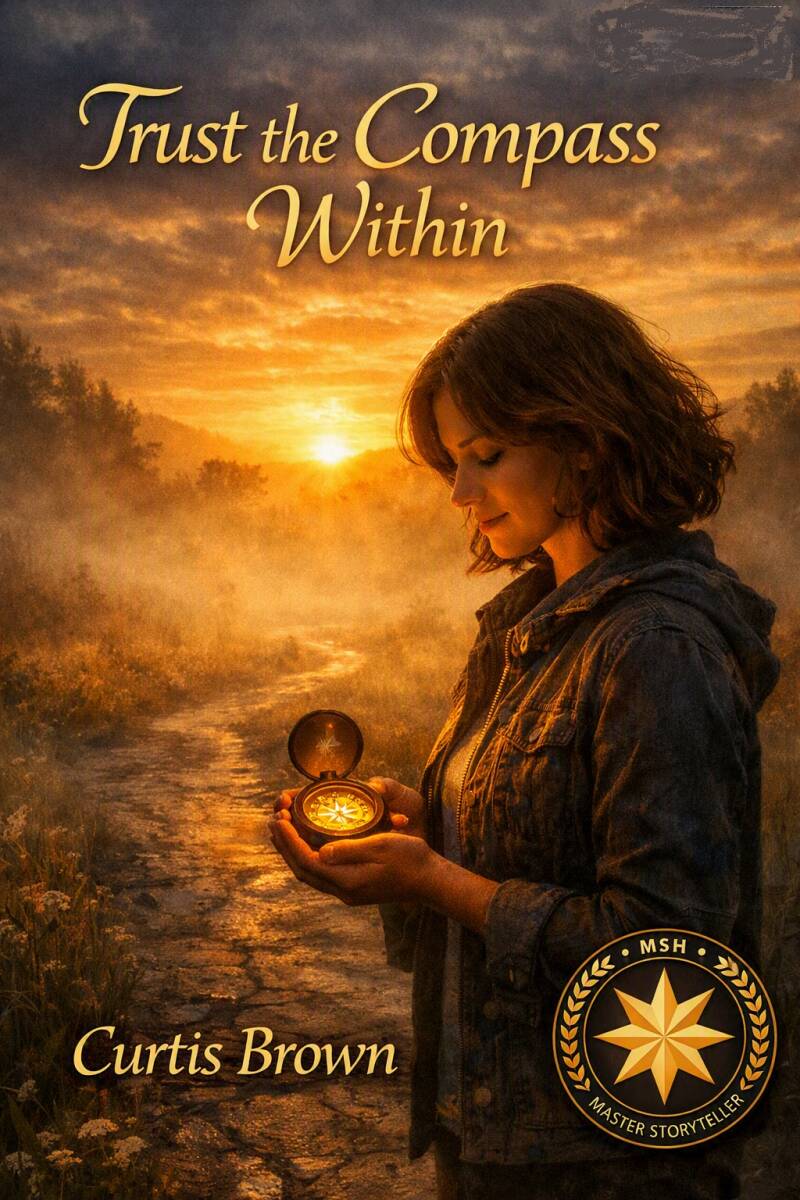
In short: When “Why Trust Matters When You’re Lost” is emphasized, survivors benefit by regaining safety, self-worth, and connection. Trust becomes the bridge from disorientation to a life where they can choose to be open, engaged, and hopeful again.
Lately, I have been asked "how do I know I can trust myself?"
My response is generally that "You may not know yet. And that's okay."
If you've spent a long time being told that your feelings were wrong, your memories weren't accurate, your decisions couldn't be trusted, or that you were always the problem, it's understandable that you would question yourself.
Self-trust isn't something you have to magically recover overnight.
You rebuild it.
Start small.
Keep a promise to yourself—and follow through.
Notice when something doesn't feel right—and give yourself permission to pay attention.
Make a decision without immediately asking someone else if you're allowed to make it.
Set a boundary—and notice what happens when you honor it.
If you make a mistake, don't use it as proof that you can't trust yourself. Learn from it.
That's important because trusting yourself doesn't mean believing you'll always make the right decision.
It means believing that if you make the wrong decision, you are capable of recognizing it, learning from it, correcting course, and taking care of yourself.
You don't need perfect judgment to trust yourself.
You need a relationship with yourself where your own voice matters.
So instead of asking, “Can I trust myself completely?”
Try asking:
“What is one small decision I can make today that shows myself I am listening?”
Then make that decision.
And tomorrow, do it again.
Every time you listen to yourself, honor yourself, protect yourself, or keep a promise to yourself, you're giving yourself another piece of evidence.
Eventually, you won't have to keep asking whether you can trust yourself.
You'll have a history that answers the question for you.
Self-trust isn't something you find. It's something you rebuild—one decision, one boundary, one promise, and one act of self-respect at a time.
Prayers,
Curtis
Add comment
Comments