The Shadow Side: What Trauma Can Cause ~
Psychological & Emotional Effects
Trauma rewires the brain's threat-detection system. The amygdala becomes hyperactive, keeping survivors in a state of chronic alertness even when danger has passed. This manifests as:
-
PTSD — intrusive memories, flashbacks, nightmares, emotional numbness
-
Complex PTSD (C-PTSD) — especially from prolonged or repeated trauma; includes difficulty regulating emotions, deep shame, distorted self-perception
-
Anxiety and panic disorders — the nervous system stays "switched on," making it hard to feel safe
-
Depression — often rooted in grief, loss of self, or learned helplessness
-
Dissociation — mentally "checking out" as a protective mechanism; can range from mild detachment to full dissociative episodes
-
Emotional dysregulation — intense mood swings, difficulty calming down after being triggered
Behavioral Effects
The body and mind adapt to survive, but those adaptations can become harmful outside the original dangerous context:
-
Substance use as self-medication
-
Self-isolation and withdrawal from relationships
-
Risk-taking or self-destructive behavior
-
Difficulty maintaining employment or housing
-
Sleep disorders — insomnia, hypersomnia, nightmares
-
Disordered eating
Relational & Social Effects
Trauma, especially interpersonal trauma, damages the template for how we relate to others:
-
Difficulty trusting people, even safe ones
-
People-pleasing or fawning behavior — a survival response that becomes a default
-
Attraction to familiar (sometimes harmful) relationship dynamics
-
Challenges with boundaries — either rigid walls or almost none
-
Isolation stemming from shame or fear of judgment
Physical Effects
Trauma lives in the body. Research increasingly shows the mind-body connection in trauma response:
-
Chronic pain, headaches, gastrointestinal issues
-
Weakened immune system from prolonged stress hormones
-
Increased risk of cardiovascular disease
-
Heightened startle response
-
Physical tension, especially in the chest, jaw, and shoulders
The Light Side: What Trauma Can Also Produce
This isn't about minimizing pain — it's about the full, honest picture.
Post-Traumatic Growth (PTG)
Psychologists Richard Tedeschi and Lawrence Calhoun identified that many survivors, after working through trauma, report growth in five key areas:
-
Personal strength — "I know now what I'm capable of surviving"
-
New possibilities — careers, advocacy, paths that wouldn't have existed otherwise
-
Relating to others — deeper empathy, more meaningful connections
-
Appreciation for life — heightened awareness of what truly matters
-
Spiritual or existential change — a richer, more examined sense of meaning and purpose
Heightened Empathy
Survivors often develop a profound capacity to understand suffering in others. This is why many therapists, advocates, social workers, and healers are themselves survivors — their pain became a form of expertise.
Resilience
Not the toxic "bounce back" version — but the hard-won ability to face difficulty without being destroyed by it. Resilience built through trauma is not fragile optimism. It's informed, battle-tested endurance.
Clarity of Values
Many survivors describe trauma as stripping away the non-essential. What emerges is a sharper understanding of what they believe, what they won't tolerate, and who they want to be.
Community and Advocacy
Shared trauma often builds powerful bonds. Many of the most effective support systems, movements, and organizations in the world were started by survivors who turned their experience into action — domestic violence shelters, addiction recovery programs, grief support networks.
Heightened Intuition
Survivors often develop finely tuned threat perception — the ability to read rooms, people, and situations with striking accuracy. When channeled constructively, this becomes a powerful social and professional skill.
The Important Middle Ground
Trauma responses are not character flaws. They are intelligent adaptations to impossible situations. The goal of healing is not to erase them but to make them optional rather than automatic.
Not everyone experiences PTG, and that's okay. Growth is not a requirement of survival. Simply surviving is enough.
Time alone doesn't heal trauma. Processing — through therapy, community, creative expression, body-based practices — is what heals it. Time just passes.
Trauma affects everyone differently. Two people can experience the same event and carry it in completely different ways, depending on their history, support systems, biology, and resources.
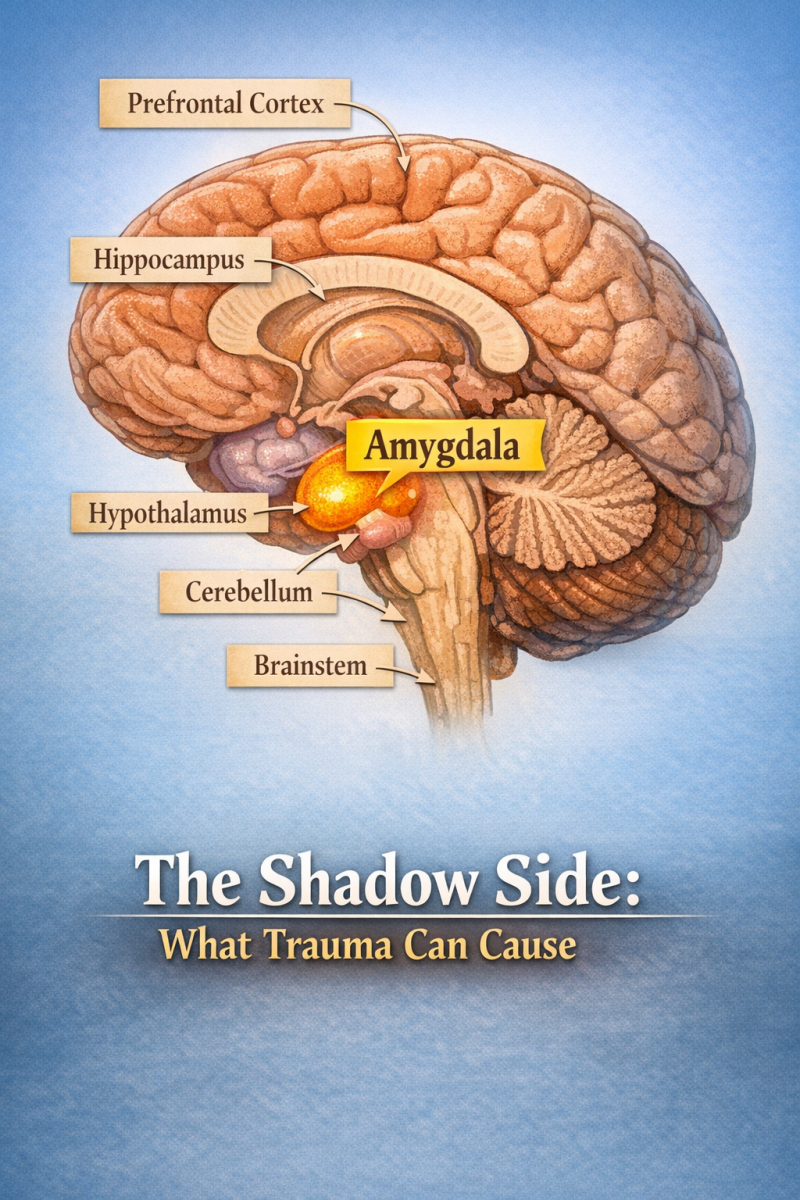
I was recently asked to describe what I knew about trauma and create a presentation of the effects trauma causes.
I wanted to emphasize, that 2 people can experience almost identical forms of abuse, yet they respond differently to how severe and how they respond to therapy, there is NO one size fits all.
Each individual is highly encouraged to seek their own therapist that can comprehend the minor nuances and adjust treatment as necessary.
I also wanted people to understand when it comes to trauma it normally engages more of our senses, which is why we can remember tragic events more easily. when utilizing more senses our body remembers as well as our brain, which makes healing difficult to handle.
I am not saying don't try, I am saying that it will take hard work to overcome the events and reduce the severity when they do occur.
Prayers,
Curtis
Add comment
Comments